
FAILURE MOVES YOU FORWARD - CHANGEMAKERS LAB M4
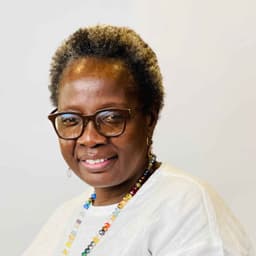


Photo Credit: Yes we have permission to share this image
My Husband and I with the Traditional Ruler of Keredolu and his wife
Failure is part of human development and that is why in my community there several proverbs to acknowledge failure as part of development. Some of these proverbs are: “My enemy, do not make jest of me because as many times I fall down I will rise again to move forward.” “Falling down is not the end of man because he will always rise again and catch up with those who left him behind.” It is only natural that as an organization we have embarked on actions that failed, but eventually our learning from those failures have helped us to arrive at where we are today.
Women Inspiration Development Center (WIDC) works to combat violence against women in Nigeria through powerful networking, educating women and girls to be more assertive, empowering communities to prevent gender-based violence and create support groups for women to help them with their healings and create economic power for themselves.
In Nigeria, at least one in every three women is likely to have been beaten or abused in her lifetime. The most common violence against women and girls in Nigeria is sexual and domestic violence at the hands of their intimate male partners.
Some of the injustice against women and girls we are advocating to change are:
• Intimate partner abuse, sexual violence, sexual abuse of children (which is becoming more rampart in our communities due to high monetary return), female genital mutilation/cutting, early marriage, forced marriage, and exploitation of young girls by older men (often significantly older).
• Psychological violence that damages self-esteem, identity, and development of female gender. This includes humiliation, threatening loss of custody of children, forced isolation from family or friends, threatening to harm the woman or girl or anyone she cares about, degradation, controlling behavior and destruction of property
• Wife battering is another form of violence that we are advocating to change in our communities. Reportage is now more with the sensitizations and awareness of women of their rights
When we started our work, our advocacy was mainly to reach the affected women and empower them to fight against their abuse. WIDC organized and facilitated workshops for women in different communities teaching them to create their lives the way they most want it so that they could be free from abuse and culture of silence which has been plaguing them and preventing them from reaching their potentials. The workshop focused on seven areas of life: emotions, relationships, sexuality, money, body, work, and spirituality. In each of these life areas, participants would discover what’s uniquely meaningful to them and learn to translate the insight into a realistic vision. They learned to achieve greater prosperity and a greater quality of life; create work that is fulfilling and inspiring; develop a conscious and sacred relationship with their body; and build their spiritual path around a sense of higher purpose.
We succeeded in organizing workshops in communities at the beginning. However, once some of the workshop participants began putting the learned ideas, visions and steps into practice, WIDC experienced serious opposition to our work from the male authorities in the communities where we were working. The patriarchy nature of our society still runs very deep. Therefore, the men did not like these changes that were occurring in the lives of their women and girls with whom we were working. The men felt that WIDC was turning their wives and daughters against them.
Therefore, to curb this ‘revolt’ as the men saw it, they prevented their wives and daughters from attending the WIDC workshops. As a result, WIDC had serious difficulty in securing participants for workshops. We will get to villages only to meet empty chairs because the men refused to permit their wives and daughters from attending. Dangers of physical attack loomed on our heads as men plan to beat us up if we attempt to come back to their villages again.
Our learning from this experience was that a patriarchal culture was still very much part our society and that we must find a way to work within and around it to be able to reach the women and girls. First, we built a network of males who were interested in our work. It was not difficult to get my husband and sons into the work as the founder of the organization. My husband and two sons joined our work and in no time, they were able to convince some of their friends also to join our cause. I also recommended to the organization we are working with in the USA, the Empowerment Institute (where we received training for the empowerment workshop that WIDC conducts) to sponsor my husband to come for the training. This way, he can be organizing the empowerment workshops for the men too. Our recommendation was accepted, and my husband became an empowerment workshop trainer. He began organizing the workshop for men to re-orientate them on the belief that their women are also human beings that have the right to take decisions over their lives. These workshops are helping Nigerian men to develop their agency, take more responsibility for their actions, develop higher self-esteem. The men who are going through the empowerment workshops are beginning to see their wives and female counterparts as partners rather than subordinates. Many of the men are also developing inspired desires that are helping them to be free from frustrations and depressions.
This experience has helped our growth tremendously. Whenever we get to any communities for our workshops, our first step now is to visit the community leaders, discuss our mission to them and have a mini workshop with the males in the community. We found out that after this, they assist us and become the encouraging factor in urging their wives and daughters to attend our workshops.
It has also helped us to see more results and more positive changes in the lives of our female participants because they have more freedom in exhibiting the changes learned from our workshops. In one of the communities we worked, the community head pronounced after our workshops in the village that violence against women will soon become history in his village because the community leaders will make sure that any perpetrator would be dealt with severely. Now, we have been able to organize these workshops for about 7000 women and girls to date and we have been able to influence more than 3,500 males through our village outreaches and our radio programs.
- Economic Power
- Leadership
- Girl Power
- Gender-based Violence
- Africa