
DRC: Bringing Healthcare Closer to the People
Feb 25, 2020
story
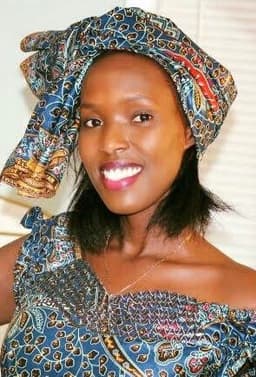
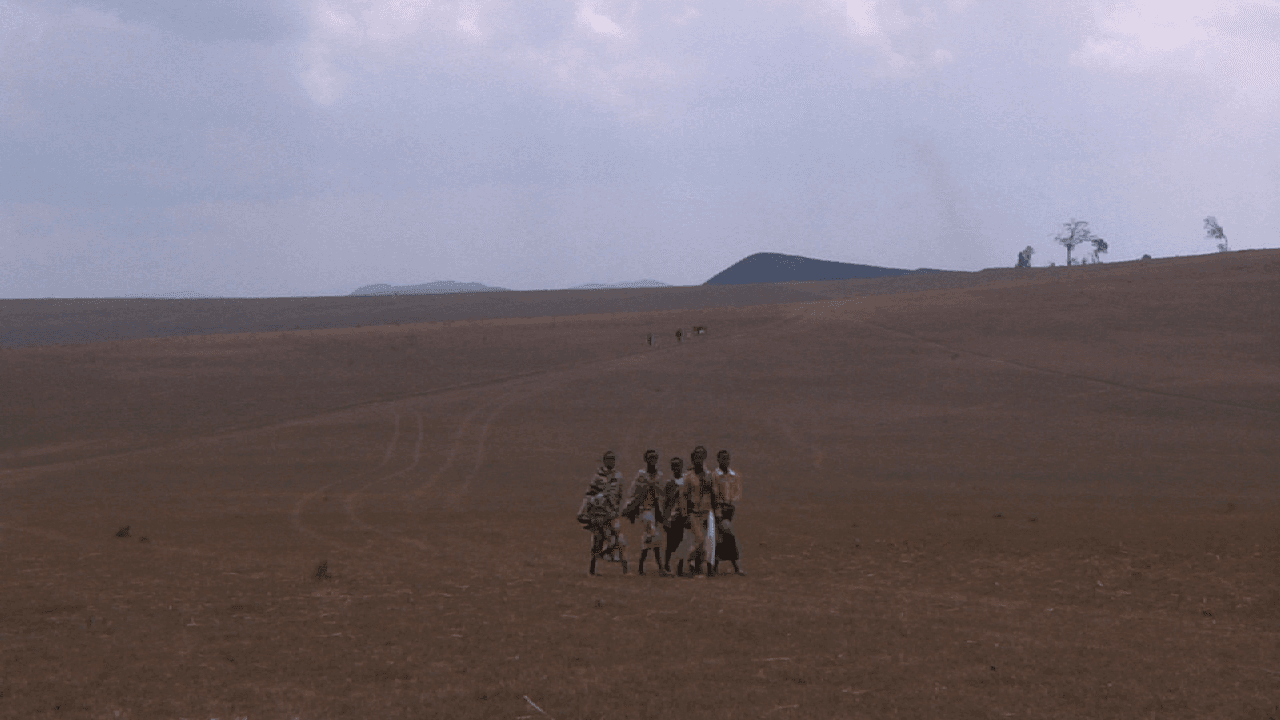
Photo courtesy of Adele. Credit: Paul Freedman
A tragedy set Adele on the path to making healthcare accessible in rural Democratic Republic of Congo.
I survived a massacre but was unable to save a child from a high fever.
When I was a teenager, a little boy named Guillaume changed my life. I grew up in Uvira, a town in eastern Democratic Republic of Congo, perched on the shore of Lake Tanganyika and surrounded by a range of mountains.
It was 2001 and my three friends and I were babysitting 2-year-old Guillaume to help out a relative. He was an active and happy toddler. I remember his outfit that day; he was wearing a shirt emblazoned with the image of Brazilian soccer star Ronaldo.
Guillaume’s mother was at the market trading goods with other women. Soon after, we noticed that Guillaume was not running after his ball as he usually did. He was shivering and his body felt hot to touch. His mother may have noticed the fever before she left and hoped it would fade away on its own.
But as the day progressed, the fever did not abate; it grew in intensity. I suspect Guillaume had malaria, the most prevalent disease in my community. We had all had it many times. We saw what adults did when one’s fever was too high, so we bathed Guillaume in cold water. It did not help much.
Guillaume had a seizure. We were frightened and did not understand what was going on. My friends and I decided to take him to our closest health clinic so that he could get medicine. But the closest clinic was very far away and there wasn’t a good road or an ambulance to get him there. We pushed him on a commercial bicycle, trying as best as we could to get him to the clinic.
But it was too late. Guillaume died in the middle of a dirt road before we could get him medical help. Had there been a clinic near where we lived and basic infrastructure to get there, the child would likely have lived. Looking back at that experience now, we probably only needed Tylenol to bring down his fever.
This experience left a mark on me as a teenager and sparked a lifelong interest in the medical field. When I reached high school, I had to choose a major, as is customary in Congo. I chose biochemistry with the intent to pursue a career in the medical field and fulfill a dream to bring healthcare services closer to communities.
This went well for a while, but life in a conflict zone is unpredictable. Back then, occasional armed incidents would force us out of our homes for a few weeks at a time. This was part of life. When armed conflicts erupted in our small town of Uvira, we normally fled to neighboring Burundi. We crossed right back after things calmed down.
In 2004, everything changed. I was in 10th grade and a war broke out in my region. My family and I ended up in a United Nations refugee camp across the border in Burundi. We stayed there for more than two months, living between hope and despair. During the third month, our refugee camp was attacked by militias.
Guns were fired, grenades were thrown, and the entire camp was set on fire. I lost everything dear to me. My younger sister Deborah was killed in our tent. My mother, sister, and brother were shot; they still carry scars from their injuries. Cousins, childhood friends, and many people from my community lost their lives in a span of a few hours.
A total of 166 people were killed that night in what became known as the “Gatumba Massacre” and another 116 people were injured. I escaped alive but my life’s dreams were completely shattered.
My family was resettled in the United States, where I slowly started rebuilding my life. I learned the language, adapted to the culture, and started a new family. I went back to school and became a registered nurse. I am currently pursuing my master’s degree.
I am very grateful for the opportunity to come to the United States and access education. I have the enormous satisfaction of helping patients in need and I can now put this to good use in my community. My education reignited my hope of going back and helping reconstruct my community after years of devastating conflicts.
Last year I co-founded Jimbere Fund, a non-profit organization dedicated to helping Congo’s remote communities access critical services, especially healthcare services for children and women.
My work focuses on the high plateaus of Itombwe, the area surrounding my hometown of Uvira. This region is home to some of the country’s most remote habitable areas. Villages are scattered over a large expanse of land and they lack access to critical health services. Many communities live beyond a 3-day walk to the nearest hospital. Community health centers are supposed to be closer to communities, but some don’t have qualified personnel or basic medicines to treat most prevalent diseases such as malaria, tuberculosis, diarrhea, and typhoid fever.
When I recently talked to healthcare personnel in the region, they reported that most people die because they go to the hospital too late. When patients feel moderate pain, they usually go to the community health center, which normally has the most basic medicines like pain relievers and not much else.
Patients go to the hospital only after they get worse and cannot walk anymore. Men carry the patients to the hospital on wooden stretchers known as kipoyo. Depending on where a patient lives, she or he can be carried on a wooden stretcher for up to four days. Local nurses and doctors have told me that by the time patients arrive at the hospital, it is, more often than not, too late.
Women and children face the most danger. Almost all women give birth at home with the help of elder peers. Taking into consideration the health and sanitation conditions, it is no wonder the maternal mortality ratio in Congo is one of the highest in the world. There are 864 deaths for every 100, 000 live births, according to World Bank figures. For comparison, this is more than 45 times higher than the maternal mortality ratio in the United States, which is estimated at 18. 5 per 100, 000 live births. Under-five infant mortality is higher in Congo than in most other African countries. Here, according to UNICEF data, one in seven children die before celebrating their 5th birthday.
The high plateaus of Itombwe have an estimated population of 260, 000 and you can count the number of medical doctors on one hand. Most inhabitants outside the villages of Minembwe and Mikenge have to walk for a day or more to get to one of these healthcare facilities to see a doctor. It is not so uncommon to find people who have never been to a healthcare facility nor seen a doctor or a nurse in their lives.
Plant-based traditional medicines are still widely used and people self-medicate when they feel sick. Although these have been passed on from generation to generation, not all illnesses can be cured with traditional medicine. In some cases, lives could easily be saved if the right medicines were provided in a timely manner.
I think of Guillaume and how an ambulance system might have saved him. One of the projects I am working on is providing emergency transport systems to isolated rural communities in the high plateaus of Itombwe, which will significantly expand access to primary healthcare. These are remote and mountainous parts of Congo. We have studied the area and devised 16 routes for motorized tricycle ambulances where navigation is possible. Similar projects have proved successful in remote communities in countries as diverse as Ghana, Uganda, and India.
The project will also operate a toll-free mobile phone center system to connect callers to the ambulances nearest to them. We plan on training 20 drivers to operate the ambulances and provide technical support for managing the tricycles. Drivers will provide transportation to patients and medical personnel for free along well-defined routes. At times when there are no patients, drivers will transport passengers for a small fee to help offset the operating costs of fueling, maintaining, and repairing tricycle ambulances.
This lifesaving transportation can improve maternal and newborn health outcomes by allowing pregnant women to see a doctor and increasing the number of women who give birth with the assistance of qualified healthcare personnel.
We also hope to reduce transmissions of infectious diseases. Motorized transport prevents people from carrying sick patients on their shoulders, a practice that contributes to the spread of diseases like Tuberculosis. Transportation for medical personnel will also allow for more preventative care for communities.
With modest interventions like this, we can save lives and improve the well-being of thousands of people in Congo.
I survived a massacre but was unable to save a child from a high fever. No child should face such an unfortunate fate. No more Guillaumes.
STORY AWARDS
This story was published as part of the World Pulse Story Awards program. We believe everyone has a story to share, and that the world will be a better place when women are heard. Share your story with us, and you could be our next Featured Storyteller! Learn more.
How to Get Involved
Visit the Jimbere Fund to learn more about how to get involved with Adele's work.
- Health
- Africa