
Don't Talk The Talk; Walk The Walk of Inclusion
Nov 30, 2022
story
Seeking
Action
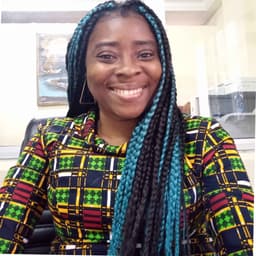

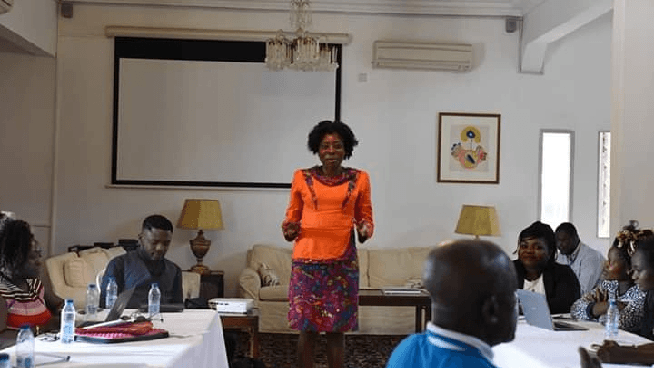
Photo Credit: SisterSpeak 237
Yours Truly during a Disability Workshop organized by SisterSpeak237 in which I challenged those present to be better versions of themselves.
COVID 19, in so many ways, changed the way we do a lot of things. While so many are moving and adapting with the changing times easily, people with disabilities are mostly stuck in pre-covid era, through no fault of their own. Despite the fact that inclusion is fast becoming a favourite sing song in many social spaces, the reality is far from what we know.
Again, when COVID struck, so many easily adapted to having work, school and basically everything that could be moved, from the physical to the online space. Challenges notwithstanding, it was still easy to adapt for many.
Not so for some of us. In the past two years, I cannot count the number of times I have asked this question ‘Is it going to be inclusive for the hearing- impaired?’ When I come across interesting programs, workshops, conferences etc held online neither can I count the many missed opportunities to be on a talk or panel after asking the above and nothing was forthcoming as a reply except silence from the other end.
Sometimes, browsing social media platforms, I would stumble on a very catchy flyer advertising something I really wanted to attend but will end up not attending because the answer to my now infamous ‘Is it going to be inclusive for …’ always meets a dead-end. It is usually always like ‘ Let me ask the organisers’ ‘Oh, we didn’t think of that’, ‘ Just attend, we will see what we can do’ this last part in most cases, always ends up frustrating me because, I would give into the benefit of the doubt, log on to zoom and stare at my screen for hours, understanding or hearing zero.
I may sign out, beg someone to listen along with me if I have company , which often means keeping their own things on hold. Other times,I would try posting on the chat asking for at least a captioner and often get ignored. Very few would reply and ask what they could have done better to accommodate my needs.
This was a recurring issue during the Covid-intense era and even now, I still ask and still get the ‘We didn’t think of that’ reply.
It is sad that in this era of so much talk on inclusion, so many talk without really walking the walk.
A lot of conferences, workshops, and online programs are still being organised without provisions for inclusion for the hearing impaired. And the same can be said of those organised offline. Just recently, I missed an opportunity to be part of a presentation on zoom because I asked about how they intend to make the program accessible and inclusive for the hearing impaired and nothing was forthcoming. I was encouraged to attend and it was painful to log in and find myself just staring at my screen, until I had to log out.
Accessible buildings are also a big nightmare. So many continue to construct without ramps which makes it extremely difficult for wheelchair users, crutch users, blind and cane users to have easy access to conferences and various programs.
The lack of provision of these important factors towards inclusion shows a lack of plan and ‘ I don’t care’ attitude in most cases. Many never stop to think and ponder on the What Ifs.
What if someone deaf or hearing impaired is interested in our program, etc can we accommodate them? What can we do? Can we ask their opinions of how best we can help them and act on it?
What if someone on a wheelchair, etc is coming to our talks? Are our halls accessible enough to make it easier for them?
What if someone with a disability of any kind is using our transport services? Do we make it easier for them?
The what ifs are many, but pondering on them is the first positive step towards creating a more inclusive society.
Pondering over these would move one to provide help for the deaf and hearing impaired through provision of resources to meet their needs.
Pondering over these would mean building accessible halls and transport facilities.
Pondering over these could mean you see people with disabilities as valuable players in the field who need a level ground to amplify their voices and skills.
It would mean you see their individuality first before their disability. It would also mean you see more than just statistics and ticks to present in your report. It would mean, in a period when the song of inclusion gets louder and we are all talking of a more inclusive future, we are ready to join the moving wagon of those who are not only talking the talk, but are ready to walk the walk of inclusion.
- Leadership
- Disability Justice
- Education
- Technology
- Global