
Don't African presidents have a retirement age?
Jan 21, 2015
first-story

On 10 November 2008, we woke up to the sad news that Miriam Makeba, a.k.a Mama Africa, had died of a heart attack during a performing visit to the Naples in Italy. She was 76.
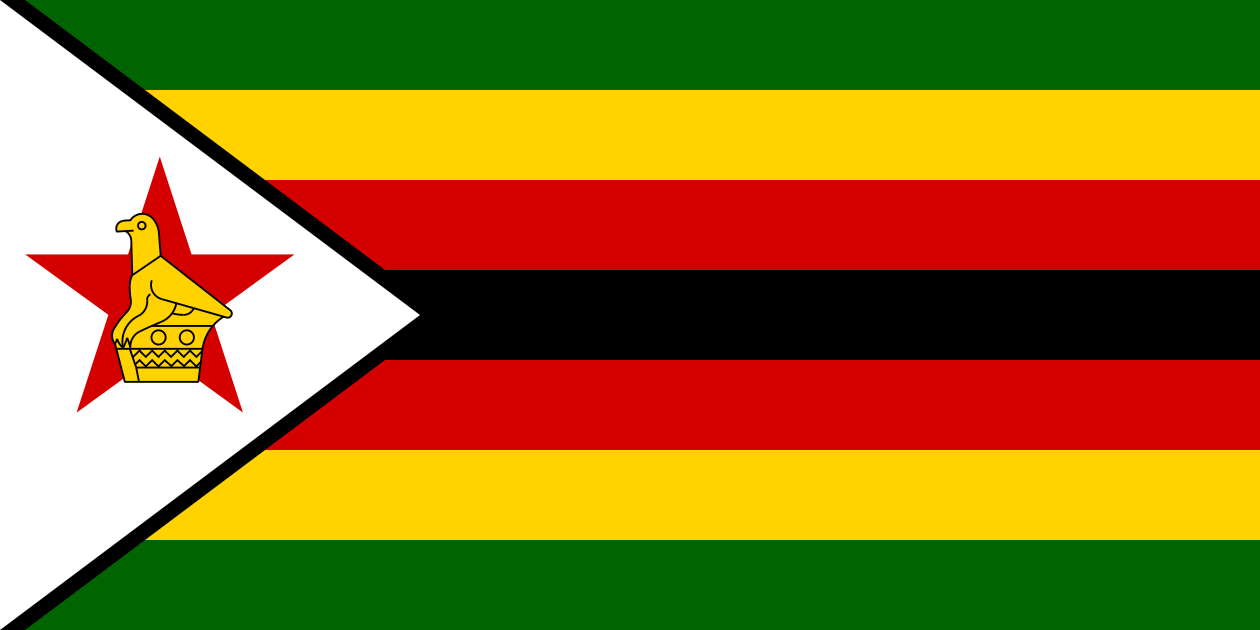
On sharing this sad news with a colleague, his insensitive response was “Why was she still singing at the age of 76?” My immediate retort was “(Robert) Mugabe still wants to govern the country at 84, and at least Makeba was entertaining people, not implementing policies that were causing suffering and pain – if anything, she had more of a right to maintain her job!”
That got me thinking about retirement. Apparently, Mama Africa had begun talking about retiring. Clearly, she had also scaled down her activities so we can safely say she was undergoing some transition towards retirement. Makeba left a legacy after an illustrious career.
On the other hand, I could not help but wonder if African presidents have an official retirement age. In most countries, the retirement age for civil servants is 65. I imagine the same applies to the private sector. This must be governed by the assumption that after a certain age, the human brain begins to deteriorate and general health plummets. Besides, people generally need to rest from all the years of toiling and enjoy the fruits of their labour in the comfort of their homes, surrounded by their grand children and loved ones. At least, that is the way life used to be – or so we were taught during our growing years.
Bearing in mind that national presidents are civil servants, surely, they should not be exempted from such rules – afterall, the stakes are higher! There is a vast difference between the retirement of an old man who is working in a small printing company and one who is running a government. Yet, what we see is the opposite – some old men have no desire to rest and still feel they have a lot to offer the nation – even if evidence on the ground testifies to the contrary. The list of African presidents who remained in power long after the acceptable retirement age and subsequently caused untold suffering is quite long. Examples abound, including Malawi's Kamuzu Banda and the then Zaire (now Democratic Republic of Congo)'s Mobutu Sese Seko. I thought it might be interesting to do a survey on the ages of sitting African presidents. But then again, even if an age limit was imposed, who would enforce it anyway?
I could not help but wonder, though. Why is it so difficult for people to let go? Is power that sweet? Why should the will of an individual prevail over that of a nation? Are some people more important than others?
True, George Orwell in his “Animal Farm,” did say “some animals are more equal than others,” but it would be comforting if that had just remained a mere sentence in a book of fiction. Sadly, that is the reality that characterises the politics in our beloved continent.
- First Story
- Africa