
Digitally Cut Off-International Women's Day
Mar 3, 2023
story
Seeking
Collaboration

In the era of tech and the inherent globalization , a lot of things are being done with the aid of technology. Transactions , communication , scientific innovation and everyday work that used to consume a lot of manual labour is increasingly being made easier due to technology.
However, despite this , there are millions of women and girls who are still in the dark when it comes to technology. Economic and systemic reasons hinder them from access and use of tech.The digital inequality really played out during the onset of COVID-19 where learning came to an abrupt stop and c everyone went back home. For many children in informal settlements’ and other disadvantaged localities , that was the ‘end ‘ of their education until schools resumed operations.
Imagine this world, where everyone has access to digital technology, where people can interact without hindrance .Many women would love to use technology with ease but due to lack of skills and knowledge on how to use these gadgets, lack of access due to cost inhibitions as well as lack of connectivity and electricity hamper the ease and use of digital devices.
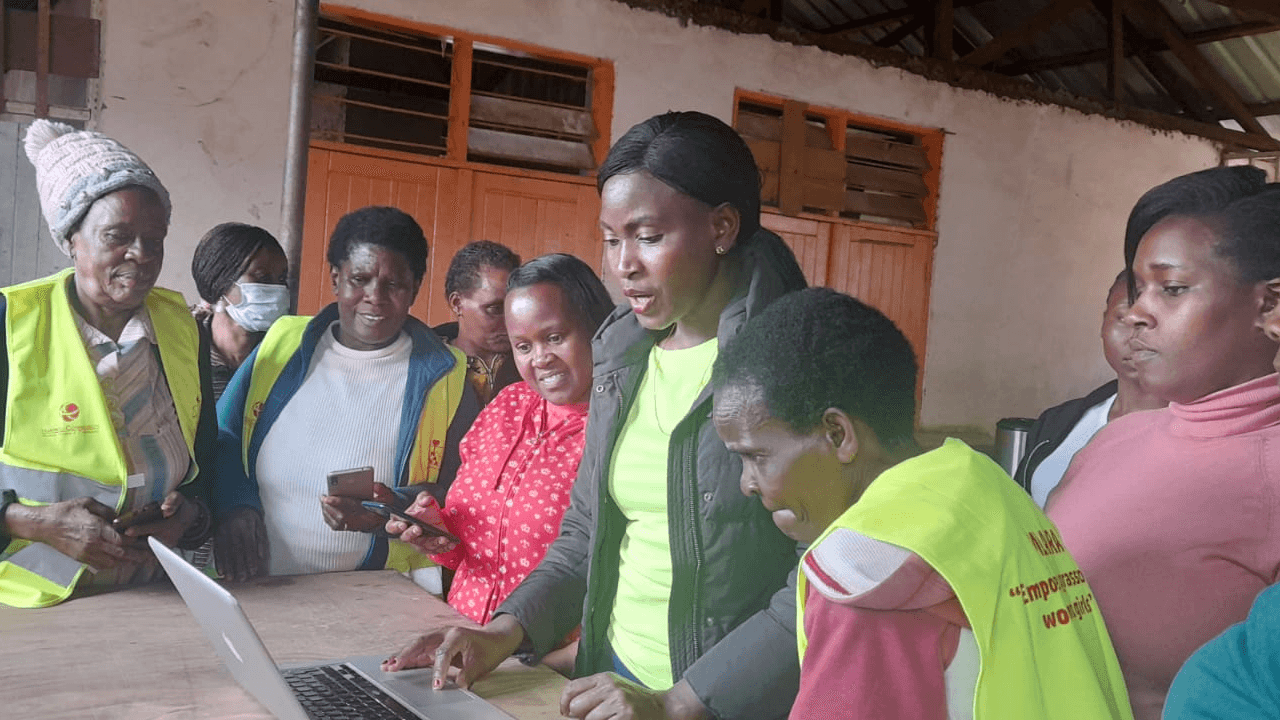
In a community training with women in Mathare , I once commented that do you know in this training we can go live and people in different parts of the world will know that we are having an organisational development capacity building in Mathare? Mama Njoki asked how?. With this , we had to take a few minutes from the training and take Mama Njoki and her friends through how to use twitter , how to attach photos ,how to post stories on Facebook .I shared with the members of Mathare Legal and Human Rights Advocacy (MLHRA) that the great work they are doing in the community as Community Health Workers, caring for children and mothers, the home visits they make , the fight for land tenure for persons living in informal settlements in a highly urbanized society are issues that they can convert into stories , into voices and bring them to the essential spaces of decision making. In the short space of digital intervention , we had a discussion on importance of communication as an activist and community change agent .We delved into the importance of clarity in communication and how to avoid misinterpretation. We spoke of using any language that one is familiar with and that it is not imperative that when you use social media you have to use only English but use a language that one is comfortable with. We got to discuss the different audiences with Mama Njoki and why it is important to know our target audience when we communicate. We shared what is twitter, how to upload photos and how to put across messages. Njoki beamed , excitedly taking in all this .This tells you how much women and girls digitally cut off are yearning to have access to digital technology. We got to delve on how to take photos and importance of photos in telling our stories and communicating our realities.
With the short training on how to use digital devices for communication, Mama Njoki and her friends were very excited .The smiles and laughter told it all .This was just a 20-minute engagement , supposing it could have been an hour or more?. How much would they have gained from the process?.
Many women are feeling disconnected and embarrassed because they cannot use technology. I remember when I first started using a computer , I was afraid to ask for help when I did not understand the keyboard. I felt embarrassed of making mistakes , with time , the confidence grew and now I can type verbatim and use the digital skills that I have to do rapporteuring. I’m able to do community work , engage in discussions , train others and amplify local realities , thanks to being able to use digital devices , what of the millions of women and girls in my continent -Africa?.
They are yet to discover many things if only they had access to digital literacy, skills and devices. Many rural women would wish to know how to use computers , but lack of electricity and computers themselves is a hurdle. Many community halls in rural areas are being underutilized , put under lock the entire week except for weekends when religious sessions are held in these spaces. What if these structures were equipped with digital technology and provided to communities for free?, how much transformation can having digital connection make to young people who finish high school but due to lack of money to proceed with their education have to idle in shopping centres and end up engaging in crime and violence of wallowing in substance abuse?, how much transformation would religious spaces do to local communities if they offered free digital classes for the thousands of congregants who cannot afford it?
To what extent can new ideas be exchanged when young people , especially women and girls when they have access to digital connectivity? .The digital exclusion is real and is reduces many women to wish they could be more connected. In the era of zoom and other forms of technological explosion , women can use these spaces to reach out to each other, support one another , communicate and seek reassurance and to get solidarity and feel connected.
Investments should be deliberately put inn place to bring more women and girls to use technology. Access to electricity and connectivity need not be an impediment to utilise digital literacy.
More needs to be done to reach the DIGITALLY cut off, more so women and girls in Africa.
- Girl Power
- Leadership
- Education
- Human Rights
- Technology
- Moments of Hope
- Log On. Rise Up.
- Digital Ambassador Events
- Our Voices Rising
- Collaboration Stories
- Africa