
DENMARK: Fighting an Uphill Battle Alone
Dec 21, 2021
story
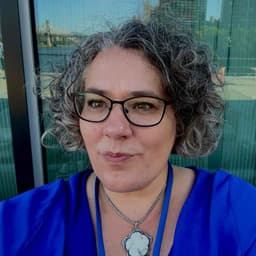

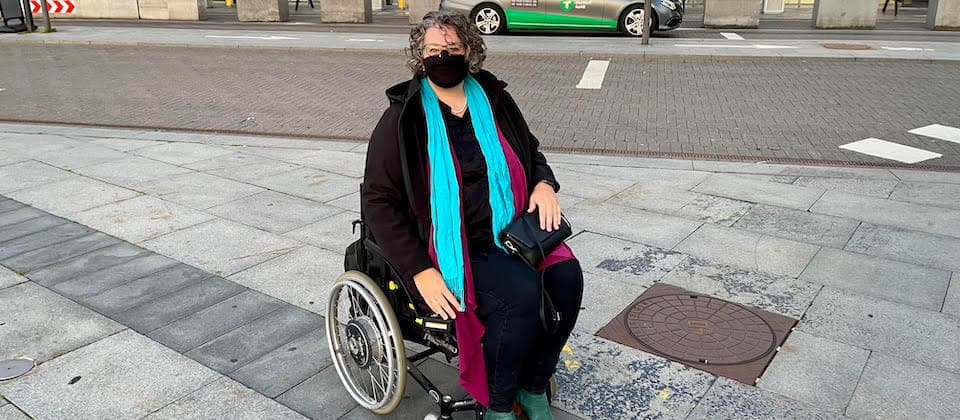
Images shows Sif Holst in her wheelchair. Wearing a blue scarf and black face mask, she poses in front of the airport. (Photo courtesy of Sif Holst)
When an airline broke her wheelchair earlier this year, Sif Holst faced months of uncertainty and professional disruption. She shares her story and urges allies to take action.
Let us all — not just people with disabilities or those very close to us — speak up when we see injustice or when people are denied equal opportunities.
I am a woman born with a disability, though the full effect did not emerge until I was in my twenties. I have a good life in many respects, but it also feels like I am fighting an uphill battle alone most of the time.
A month ago, I was on the verge of a breakdown. I wanted to kick, hit, scream — to hide beneath my bed covers and just stay there forever (or at least for a long, long time). On this day, it was a broken wheelchair that made me feel like I was going to crumble.
I am the vice-chair of Disabled People’s Organisations, a member of the Nordic’s Committee on Disability, a member of the European Economic and Social Committee, and a candidate to the Committee monitoring the UN Convention on the Rights of Persons with Disabilities, roles that make travel is a necessary part of my work.
After a hiatus due to COVID-19, I went on my first plane trip in almost two years in September 2021. First, I went to Iceland to speak about the UN Convention on the Rights of Persons with Disabilities, then to several meetings in Brussels. The speech made a difference, opening the eyes of the Icelandic parliament and union members, paving the way for the Icelandic disability movement. But the travel also resulted in the airline breaking my wheelchair.
Because of the broken wheelchair, I haven’t been able to do the part of my job that requires travel, at least not as well as I can in person. I’ve missed important meetings where I could have made an impact on behalf of people with disabilities. I’ve been left in limbo, worried whether I can continue my campaign to be elected to the UN Committee that monitors the Disability Convention.
The most frustrating feeling is that I spent so much time just managing the situation for almost two months. I repeatedly spoke with the airline, the authorities, and the insurance companies and got nowhere. I felt so alone in my efforts.
I work more than 40 hours per week for many weeks, doing what I believe in. Dealing with a broken wheelchair at the same time was exhausting. To top everything off, I had other issues related to my disability. The wheelchair I use when not traveling is old and worn-down; the same goes for my wheelchair van. To make matters worse, my mother-in-law was struggling with health issues.
When we drove to Brussels for a meeting in mid-October, all of these compounding barriers made it difficult for me to do my job. Due to an EU summit, the police decided to clear the street we were parked on, with very short notice. My disability van was impounded. I had to wait for a long time outside an inaccessible police station on a cold, rainy day.
On that October day, I felt my only option left was to scream or hide. I had no one to turn to, as I had to send my husband into COVID quarantine (luckily, he later tested negative). He is my primary caregiver as well as my life companion. Without him, I felt more alone than ever before.
My lifeline on that day was a World Pulse sister, who gave me air to breathe and the courage to go on.
Almost three months after my wheelchair was broken, I’m no further along resolving these challenges. I’m still dealing with the airline, the airline authorities, and the insurance companies, who offer no help even if the law demands that they must. Yet, I no longer feel all alone, which makes all the difference.
This is just one recent example from my life. Having a disability is often an uphill battle to access health care, social services, or disability aids. We face so many barriers like stigmatization and a lack of opportunities. Feeling alone can worsen these challenges. That’s why having a supportive community, whether it’s family, friends, a disability organization, or a religious institution, is so important.
Women have gotten better at supporting other women, but we often step back when it comes to people with disabilities. We assume someone else will step in to help. In a welfare state like Denmark, we turn to the authorities, whereas other countries might turn to local charities. I have done it myself, feeling that I could do nothing to help, stepping away instead of stepping forward as my World Pulse sister did when I was in need.
Even if you can’t solve the problem itself, you can still provide a shoulder to cry on and offer some support. No one should face these things alone. Groups marginalized by our society need to feel that someone is in our corner. We must work as allies to call for change and give moral support. Let us all — not just people with disabilities or those very close to us — speak up when we see injustice or when people are denied equal opportunities.
This story was published as part of World Pulse's #disabilityjustice campaign and Story Awards program. We believe every woman has a story to share, and that the world will be a better place when women are heard. Share your story with us, and you could receive added visibility, or even be our next Featured Storyteller! Learn more
How to Get Involved
Sif Holst has created an initiative on World Pulse called “No One Stand Alone. ” Read about her initiative and get involved.
- Disability Justice
- Europe