
“DEFAMATION OF RELIGION” Vs PRESS AND RELIGIOUS FREEDOM ,THE CASE OF CAMEROON.
Jan 21, 2015
story
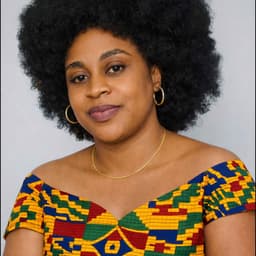

Dear Sisters,
Sorry for being this late!But I have goodnews for the family,I suucceded to get a one week scholarship by The Media Project to do a one week training in online documentary production in Capetown South Africa.Thanks to tremendous support from Rachael and the Worldpulse family in general.I arrived Cape Town today morning.I hope my assignment makes sense because I was drunk with fatigue while doing it.
Cameroon is one of those countries in Africa with an admirable level of freedom of worship. Individuals of different religious inclinations interact freely, favoring the thriving of an atmosphere of religious tolerance. Churches and mosques constructed close to each other are typical in Cameroon’s large cities which harbor a considerable population of the different religions .The country harbors 40 percent Christians, 40 percent animists and 20 percent of Muslims. Religion is an integral part of daily life in the country, as Cameroonians attach a lot of importance to spirituality. There is no official state religion but Christianity and Islam can be identified as the two main religions given pride of place during state events.
Since 1999 the Organization of Islamic Nations, comprised of 57 Nations, has been endorsing the idea that nations are obliged to implement laws against The Defamation of Religion. The text of the resolution castigates what it refers to as negative stereotyping of religions and religious figures .It also kicks against the use of print, electronic media and the internet to criticize religious symbols and venerated people. On the 25th of March 2010 the United Nations Human Right’s Council in Geneva passed a non- binding resolution Targeting ‘’ Defamation of Religions’’ with 20 votes in favour, 17 against and 8 abstentions. Cameroon is counted amongst the 8 countries that preferred not to have a say on the issue. Defamation of religion as a Human Right concept has been subject to a lot of scrutiny and criticism over the years. These criticisms range from its definition to its applicability as an authentic human right law.
\"In my opinion and in the Cameroonian context, a law on defamation of religion would tamper the admirable atmosphere of religious tolerance that currently reigns in Cameroon and usher in a legalized repression of minority religions.\"
Freedom of expression is a fundamental human right and an integral part of religious tolerance. Open and frank talks about religion could serve as a check to the excesses of religious institutions. Such a resolution would help to weaken the already skeletal form of press freedom in Cameroon. Christians, Muslims and animists should be able to voice out their religious convictions without the interference of the state. Journalists should also be able to broadcast or publish facts about all religions, with no bias. The prestige of religious institutions as yard sticks for morality in society would be more protected if attempts of moral decadence within the system are exposed and castigated rather than being cajoled in the name of shunning religious criticism.
DM Murdurk, an independent scholar of comparative religion and mythology in an article titled “Beware of defamation of religion” says “religion is not human and as such possesses no human rights that can be protected by the Human Rights Council. Defamation in its very definition involves a person and not an abstract concept like religion” In Cameroon, the marginalization of Pentecostals by adherents of mainline churches and the Cameroonian society in general, would be a local topic on defamation of religion. Catholicism and Protestantism are the major Christian religions in the country, Catholics and Protestants prefer to liaise with Muslims during ecumenical celebrations than with Pentecostals. This form of Christianity whose evangelistic activities were banned by the government of Cameroon in the 1970s and only resurfaced in the 1980s, is currently making strides especially in the English speaking parts of Cameroon. A good number of churches have been planted in almost every street corner of the country’s major cities, most of them coming from neighboring Nigeria and operating without authorization from the government. The state constitution demands that all religious bodies be registered and granted authorization by the ministry of territorial administration and decentralization. Women are often the prime victims when issues related to religious persecution become eminent. In Cameroon women are usually forced to accept the tradition of their husbands and are often highly victimized for accepting any other religion
All this not withstanding Cameroon can still be considered as a country with a certain degree of religious tolerance. A law on defamation of religion might instead provoke religious unrest in the country.
- Africa