
Crisis Management(Schools) Workshop programme
Dec 20, 2022
story
Seeking
Collaboration


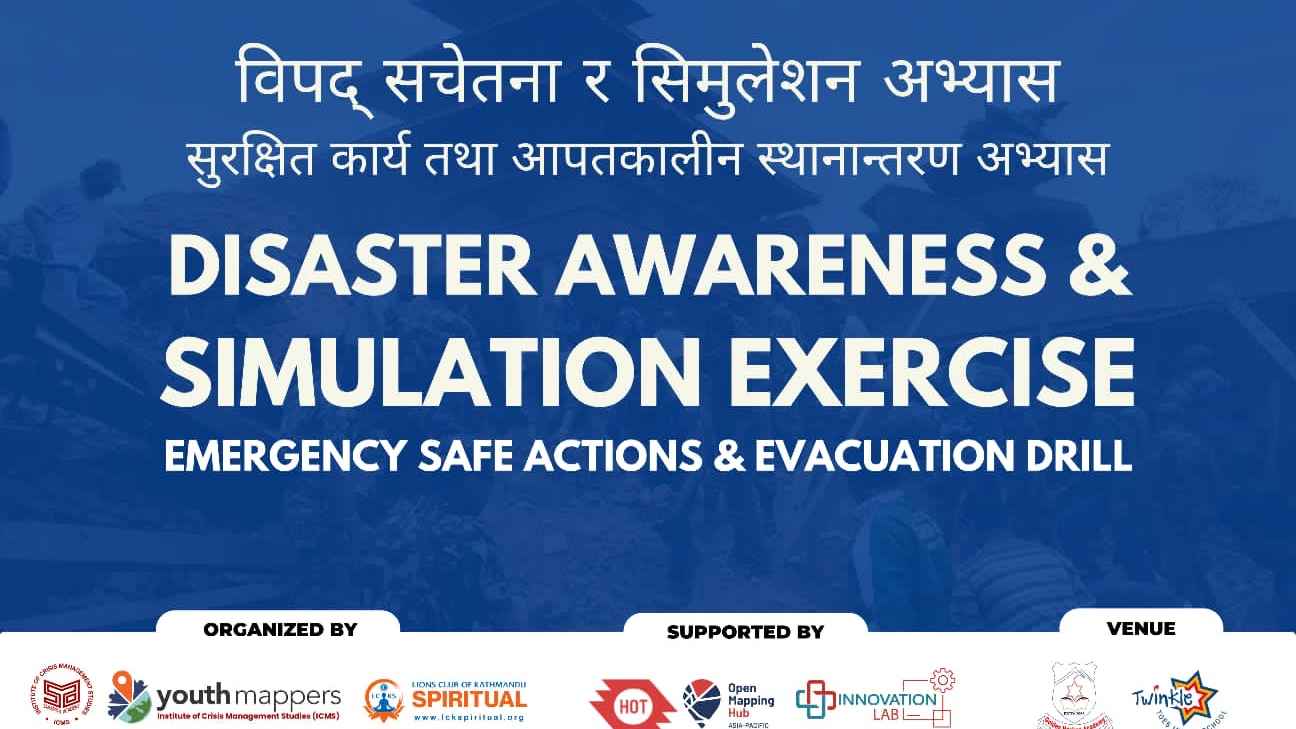
Photo Credit: Laxman Bahadur Basnet
First our main aim and objective of disaster awareness and simulation exercise are to School on students how we prepared after the disaster in our surrounding area difference between now and identify the user, and analyze maps, social media, emergency contact, and rescue to increase practical knowledge. Calculate the disaster risk structure of various disaster features. To measure the orientation of bedrock
The main aim and objective of disaster awareness and simulation exercise were:
1. To assess the risk of educational institutions
2. To Learn About or practice disaster management risks
3. To assess the level of pre-preparedness of the institute
1.Location of exercise and reason for selection:
There are many incidents of disaster in schools in Nepal. According to kantipur daily published online, News TV, 4 students died when the toilet roof collapsed at ganesh secondary school, maugada, darchula. According to the United Nations office for disaster risk reduction,50,000 classrooms were destroyed by the Gorkha earthquake
A school is a place where most children between the ages of 4-16 study at the same time. A small incident in school can lead to disaster if not properly managed.
The EPCMP exercise was held on 28 November 2022 at Golden horizon Academy, Balaju school located 7-8 Km west of the institute of crisis management (ICMS) near balaju industrial estate. The school has about 250 students from play group to class 9.
So, This school can be a model for conducting EPCMP exercises. The school management team was also interested and supported in conducting the EPCMP exercise in their School as they had not fully developed their EPCMP.
2. Location of exercise
1. The EPCMP exercise conducted at Golden Horizon Academy was done as a part of the partial requirement of internal assessment for Introduction to Crisis Management (CMS-501). Hence it was done for educational purposes only.
2. The school management is not obliged to follow the feedback given by the EPCMP conductin3This report will not be published anywhere without the consent of the concerned institution and author
Crisis/Disaster might occur at any time and in any form. If an institution is well in every aspect to confront with the possible threat, the loss of life, property, and organizational reputation would be minimized.
I prefer to take reference from Bold Man and Deal’s Four-Frame Model to identify a way forward to tackle the possible crisis/disaster. What can or should be done to mitigate possible damages or losses is explained below in detail:
a. Structural: on emergency evacuation plan and conducting rehearsal periodically, Assigning the role of each individual during emergency/crisis,
Developing a set of rules, and guidelines to be adhered to by every individual with a crisis point of view, Monitoring mechanisms to ensure adherence to rules and guidelines, Setting goals to mitigate risk and acting accordingly to meet the goal,
Establishing rapport with stakeholders in order to expedite evacuation/rescue during crisis,
b. Human Resource: Identifying individual that needs special attention or assistance during a crisis, such as: differently able, toddlers.
c. Political: Developing rapport between crisis/disaster stakeholders (Local Government, Security agency, health sector, clubs, etc.)
d.Symbolic: Installing Early warning system, Marking of Emergency exit, assembly area, and safe Zone.Rehearsal and SIMPLEX,
Periodic extracurricular activities and competitions about disasters/crises (quiz competition, play, etc.Putting disaster awareness pamphlets at different places in the school
3. Conclusions
The aim of this program was to sensitize the institution on disaster/crisis related issues and prepare the organization to react firmly with any sort of crisis/disaster. The team of ICMS assessed the disaster preparedness of the school, conducted theoretical and practical exercise on disaster risk reduction and gave feedback to the school management regarding things to improve to develop disaster coping capacity of the school. The students, teacher and the staff were found fascinated to learn and gain some knowledge about crisis/disaster. The school administration showed commitment in preparing an effective EPCMP and implement instantly. The students of class 7, 8 and 9were interest in legal aspects of Sexual abuse, child right, crime and other contemporary issues.
- Environment
- World Pulse Changemakers Lab
- 16 Days
- Shout Your Vision
- Collaboration Stories
- Climate Change
- South and Central Asia