
COMMUNITY LEADERS LEND THEIR VOICES TO STOP GBV
May 26, 2022
story
Seeking
Encouragement
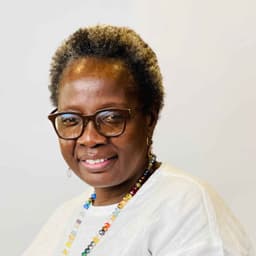


Photo Credit: Yes we have permission to share this image
PICTURE WITH THE KING, THE CHIEFS AND OTHER COMMUNITY LEADERS
Building community solidarity and accountability on violence against women and girls in communities in Nigeria necessitated seating at the round table for community dialogue to find lasting solutions to violence against women and girls with stakeholders and power shakers of the communities. The seat at table dialogue always involved the monarch of the towns, their wives the traditional chiefs, market women leaders, religious leaders, principal/proprietors of schools, security personnel, various groups/association leaders and youth leaders in the community.
At every dialogue, the purpose of the meeting was always first reiterated where I always emphasize the impact of violence against women and girls in our society which is becoming an unbecoming and inhumane. After this, the interactive session would then begin by taking the questions for dialogues one by one and everyone making their own contributions until the last question.
These are some of the dialogue questions and some of the responses from members of the community:
What is Violence against women and girls? A secondary school teacher (a woman) described VAWG as any act that is derogatory to the woman gender. The women leader in the community whose traditional title is ‘Iyalode’ said that when a man capitalizes on a woman’s lack of financial strength to maltreat and violates her is a form of violence. High chief (a man) of the community in his own part regarded stereotyping a course/career or a particular vocation to a male gender and discouraging or prohibiting the female gender to venture into such carrier especially professional courses on account that such carrier is a no-go area for female as a form of violence stating that women also have the same intellectual capacity as their male counterparts, hence no barrier should be set for females that intends to choose any carrier even if such career are dominated by the men folk. In addition, another high chief (a man) described VAWG as emotional abuse through words, neglecting of women in important matters in the family especially matters that concerns them, he also mentioned depriving the woman of sexual intimacy as a punishment from the husband and sidelining her as forms of Violence against women. Another chief mentioned that not treating women respectfully and indulging them in excessive domestic chores in the home are forms of violence. He continued that denying them the properties that they traditionally and legally inherited on the account that females don’t have right to inherit properties from their parents as a high form of violence. Other responses also include, giving an underage girl in marriage to a man, making a girl to carry heavy loads that is more than her ability on her head. Another woman said the act of rape on a girl child is a sin against humanity Also, the representative of the security personnel (Police) who coincidentally happens to be a woman enumerated some acts of violence against the female gender which includes: abuse of girls to sell illicit drugs, maltreatment of women in their respective homes, beating of a wife by her husband which is a form of domestic violence, silencing a woman until she is voiceless in the society and indiscriminatory killing of women under any guise.
Speaking on the question, “ What are contributory factors to Violence against Women that is the causes of Violence against Women and prevention of violence against women and girls”
someone said the influence of parent on their children from childhood plays a major role in the behavioral attitude of the child citing that religion also plays a vital role. She emphasized that untrained children that goes into crime and drug would ended up becoming abusers. She emphasized that when a case of violence is noticed in marriage, such marriage should be paused until a noticeable change is seen in the abusive partner. Marriage should not be a do or die affair, she said.
The stakeholders also mentioned bad parenting, indiscipline, peer pressure, broken marriages, traditions and norms of our society that enslave women and girls, social vices and extended family influences as factors fueling the fire of violence against women and girls in the society. They however mentioned as preventions that parents should be up and doing in the proper training of their children, our culture that enslave women should be discarded, there should not be separate roles for children in the homes, both of them male and female should be trained to do house chores. Religious leaders should be playing a vital role in emphasizing that men must Love their wives as Christ Love the church and gave himself for it.
On the last question which was, “should a woman continue to stay in an abusive relationship since that is what our culture says?”
The monarchs and the stakeholders of the communities emphatically said ‘No’ stating that the religious body contribute to the menace in our society. They usually urge their members who are being abused in their marriages to be patient rather than them staying away to safe their lives. One of the king however urged his town people to speak out if they are or know anyone in any abusive relationship because life is more precious and dear, once it is lost it can’t be gotten back again. The religious leaders present also corroborated the king’s words stating that they have started urging their members not to endure any abusive relationship under the pretense that the abuser will change for the better. It was unanimously agreed that in a case of abuse, separation is highly needed until genuine positive changes is seen in the abuser in which such process of separation will be closely and properly monitored.
Even though at the beginning it was a serious challenge convincing the community leaders to be part of campaign against violence against women and girls, at the end they all sign the pact to continue to protect women and girls in their communities
Our organization learnt these lessons:
· Community people are not as ignorant as we think on the issue of VAWG
· Community leaders could contribute immensely to eradicating VAWG
· That this interaction of organizations with community leaders and their solidarity if handled patiently, it can eradicate violence against women and girls to a barest minimum.
- Girl Power
- Gender-based Violence
- Human Rights
- Africa