
Committing to Normalizing Periods.
May 8, 2023
story
Seeking
Visibility


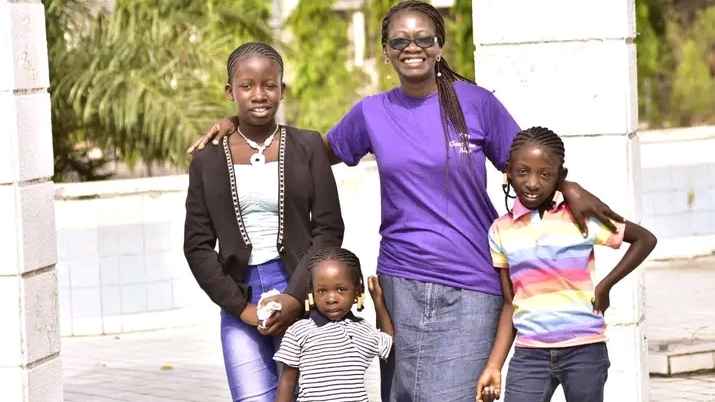
Photo Credit: Jefiter Mang
Me and my daughters 3 years ago.
I walked into my daughters' room unannounced because I wanted to know what they were up to. I heard my second's voice sounding all serious, though I could not make out what she was saying to my youngest daughter, I heard " do you understand?" And the little one said "yes" and the lecture continued.
On hearing the door open as I walked in, they scampered away giggling and my eyes caught the pad on the bed. The older had been demonstrating how to fix a pad to a panty.
" What are you girls up to?" I asked. "She is teaching me how to wear a pamper".. said my youngest daughter.
"Not again! Pad! Not Pampers!" Her older sister chided her.
I laughed and affirmed that Pampers were used for babies for easing themselves and pads are used by girls and women. As I made to tell her what pads were used for, she told me she knew. And started to blurt out all she knew.
"They are used for periods"...... bla ,bla,bla... and went on to tell me what periods were.
At that moment I had one of those proud Mama moments. Those kind of moments when you mentally hug and re-assure yourself that your resolve to do better as a parent is not in vain afterall. It is yielding fruits.
Why so? Because I grew up in an environment shrouded with the menstrual silence culture.
I never had that deep Mummy- daughter talk on anything related to menstruation, nor my periods. My mum , I guess , didn't have that too and her mom, like that.
My mom became more open many years after my menarche,then, she felt I had become a woman I guess. Unfortunately then, I had " found my way" . Though I appreciated the openess, it didn't come when i needed it most. So I determined to break the silence culture on any thing especially menstruation.
So you can imagine the pride I felt knowing that my second daughter, who is 10 is struggling to be the one to do the honors of teaching her younger sister what to do when menarche comes. She herself has not started yet, but she got a kit from me last September as she prepared to go off to boarding school. I wish to be there when it happens to her, but I do know that if i don't get my wish, she will still know what to do. And she will be alright because she has information.
We ended that conversation with me taking advantage of the moment to share how their experiences will be different from mine.
As Maya Angelou said " Do the best you can until you know better. Then when you know better, do better."
I find that very inspiring. Especially in my parenting journey. I can not do below what my parents did. I can only exceed them. So I started early to teach my girls body safety skills. We call their body parts by the proper names so it doesn't get akward mentioning them. I wanted my girls to never feel they could not talk to me about anything. So ,I have over the years tried to normalize talking about menstruation. This has helped create a positive body image and increased their confidence to talk about or ask questions when they do not understand anything to do with their bodies. Also, I involve my husband in some of this talks, because menstruation is one milestone in a girl's life and knowing that her father is there for her through this time of her life is priceless. It should not just be a Mummy- daughter thing. I am commiting to breaking steorotypes.
As Menstrual health activist, I commit each day to breaking the menstrual silence as I make girls understand the what and why of mentruation. I get joy each time a myth is debunked for a girl or she gets her questions about her answered.
Period poverty is still a big issue as up to 57% of girls in Nigeria have poor knowledge of menstruation and 77% girls re use their menstrual pads (not reusable pads). These are according to the UNFPA Nigeria.
As the world moves towards making menstruation a normal part of life by 2030 ,I see that it starts with having conversations that are not just one- off. We need to be adequately informed about menstruation ourselves first.
Teaching kids to call their private parts by their real names early,helps take the ackwardness most parents feel and dread. This conversations should involve the boys. They need to know what menstruation is and how they can help.
It is inevitable that we must all agree that Menstruation is a foundamental right issue and should be treated as such because menstruation is part of a girl and woman's health right.
Cost of menstrual sanitary products is another issue that should be looked into. I distribute sanitary products for girls ,but the high cost of getting them makes it a herculean task. It is still unfortunate that girls use rags till today , exposing them to infections and makes them prone to getting shamed because of smells and stains.
This takes a toll on a girl's self esteem.
Normalizing menstruation will promote an atmosphere free of shame, where information is readily available and every girl can be whatever she aspires to be, because then, she won't be held back by any misconception about nor restrictions by her periods.
So let's commit to normalizing menstruation, let's begin to break the silence. We know better now, let's do better by these girls.
- Health
- Salud menstrual
- Global