
Civic Action For The Greater Good
Jul 19, 2023
first-story
Seeking
Visibility


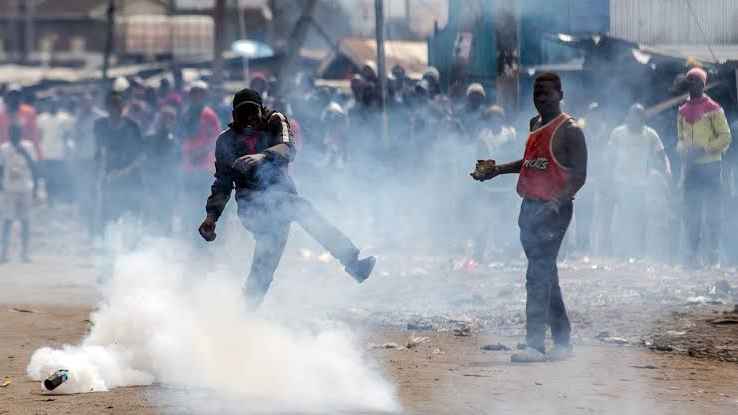
Photo credit: CNN
Prompted by the recent demonstrations taking place in Kenya, I'm compelled to examine whether a call to action involving civil disobedience is an act by the people or for the people in which case the people here refers to certain political groups.
Majority of the people involved in civil disobedience are young persons who are hungry for socio-economic change and political inclusion.
Why should they be involved in civic action and what exactly does it mean?
Civic action or civic engagement is a form of citizenship practice which involves individuals or communities working together to address issues of public concern or create change in the community.
Civic action takes place in many different forms and includes a range of various specific activities which can either be political such as voting and signing petitions, non political activities include community service projects, mentoring youths and charity drives.
Of interest though, is the political form of civic action: civil disobedience.
Henry David Thoreau, circa 1849, in his lecture on Resistance to Civil Government states thus, "The government itself, which is only the mode which the people have chosen to execute their will, is equally liable to be abused and perverted before the people can act through it. Witness the present Mexican war, the work of comparatively a few individuals using the standing government as their tool; for, in the outset, the people would not have consented to this measure..." He further goes on to reiterate that we all have a moral obligation not to support a government with unjust laws. This is true even if withholding our support means breaking the law and risking punishment.
This holds true to the present state of all nations with standing governments focused on personal interests, cronyism and puppetry (the latter being a chronic symptom of ailing African governments)
Kenya today is not the Kenya of yesteryears. Characterized by high inflation, debt distress, high rate of unemployment and income inequality, young people are finding themselves getting the short of the stick and are resorting to extreme measures to get their grievances heard. Civil disobedience is one of those measures which causes disruption and focuses attention, while forcing debate with the aim of bringing about fundamental and progressive changes within our societies and our world. In as much as a failing government has been a contributing factor in Kenyan civil disobedience, one of the outstanding factors is lack of political trust. People supporting the opposition camp have higher levels of civil disobedience, whereas those supporting the standing government display lower levels of civil disobedience. This suggests that an individual’s level of civil disobedience depends on which party is in power as the case has been in Kenya with more young people expressing anti Kenya Kwanza sentiments which is the government of the day.
Are the demonstrations for the good of society to address the high cost of living, as a lack of political trust or both.
I'd say BOTH.
Will the demonstrations have a positive outcome in the long run? Only if they're organized and conducted with a clear, identifiable purpose and cause of action after completion.
Quote of the day.
"It’s not enough to believe in something. You have to be ready to stand for something, if you want change."
- Edward Snowden
- Human Rights
- Leadership
- First Story
- Our Voices Rising
- Revolutionary Solidarity
- Global