
CANADA: Sacred Lessons from the Matriarchy
Apr 30, 2019
story
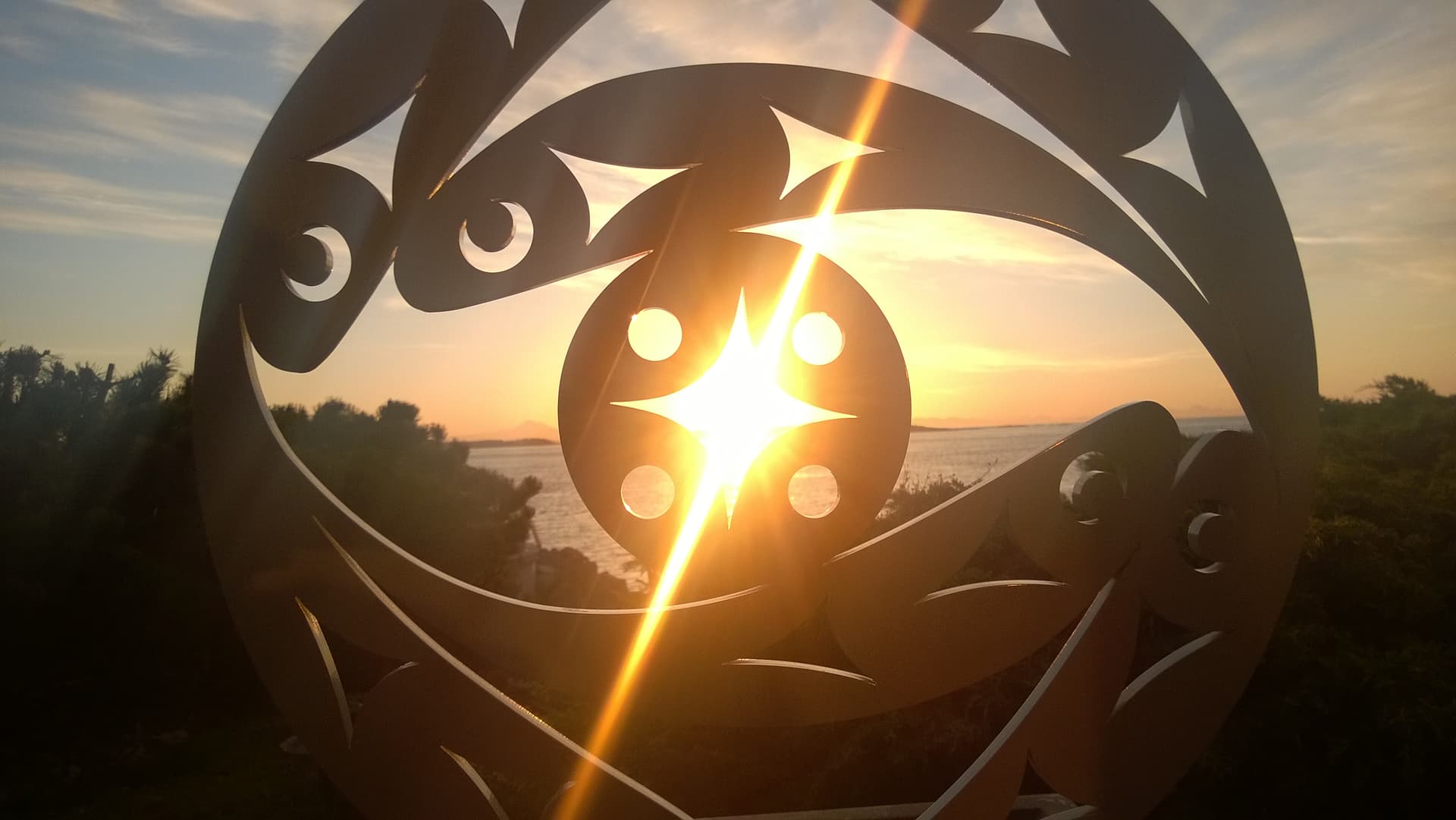
"Eye of the Storm" sculpture by Coast Salish artist Chris Paul. Photo © Bill Smith (CC BY-SA 4.0).
As an indigenous Cowichan woman caught between dueling cultures, Sharon Lewis strives to fulfill the hopes of the strong women who raised her.
As the last baby to gain the teachings of the longhouse, I hold the knowledge of a way of life that is quickly being lost.
When I was born I was given to my grandmother Ellen of Clem Clem Longhouse of Coast Salish Territory. I was breastfed and raised by five longhouse mothers according to matriarchal traditions of our indigenous Cowichan Nation. My grandmother was a clan mother, a matriarch of the longhouse and nation. She and the many mothers of the longhouse filled me with care, teachings, and love. Who could ask for anything more?
When I was three years old I was named \"Tzouhalem\" in a huge naming ceremony. Twelve mask dancers, a whole team of singers and drummers, dancers, guests, and witnesses participated in my naming. I wore a red shawl during the long, beautiful ceremony. Three pit fires burned all at once in the middle of the longhouse. The drumming and singing lasted for hours. My grandmother prepared a whole feast for the peoples after the ceremony and gave away money, blankets, shawls, rice, and sugar for the occasion.
I was given an old name going back over 10, 000 years that belonged to my grandfather Chief Tzouhalem. I carry his name with honor! I Also have an English Name, a reminder that I live in two cultures and two worlds that oppose one another greatly.
I had a wonderful childhood, but as I grew older, I began to see my peoples of Coast Salish Territory losing our culture, our language, and our way of life. My upbringing was in conflict with the laws of Canada and patriarchal Canadian societal rules.
The Indian Act of Canada has been taking away the voice of Native women ever since it first passed in 1876. This legal framework denies women of Coast Salish Territory the right to a living cultural identity and practice.
Our longhouse cultural ceremonies and dances were outlawed until 1951. My family members had to keep them alive in secret during those years. When I was raised in the longhouse, my brothers and sisters and nation of children were sent to residential schools where they were forbidden to speak their own language or participate in cultural spiritual ceremonies. I have watched my nation disappearing from the genocide of Coast Salish peoples under Canadian laws.
Canadian marriage and family laws are part of a continuous cycle of legal oppression and abuses. Under Canadian laws, we take our father’s last name; in the longhouse Coast Salish way, we take a name our grandmother gave us. Under the child welfare system, raising children in the longhouse with our traditional customs is not acceptable. Today, children raised the way I was can be removed from their parents or households.
The Indian Act marginalizes Native people through Canadian jails, schools, and healthcare systems. The Indian Act is supposed to provide for Native people’s health care, but our health care is delivered in a framework of discrimination. The legacy of Canadian healthcare includes a dark history of forced sterilization of many Native women through 1970s. Today, doctors may choose not to accept Aboriginal Affairs health insurance.
As a clan mother, my grandmother had the ability to address the nation on all socio-economic issues. The clan mother decides who is the next chief of the nation; the chiefis not elected. Today the foreign influence of the Indian Act imposes an election process that takes away clan mothers’ duty. The laws of Canada deny Native women from playing a key role in policy making and they impose poverty on women by ignoring our traditional voice in our economy.
When I was in my 30's, after I had children and became a mother myself, I sat down for tea with my mother and I asked her, \"Mom, did you love me when I was born? How Come I grew up in the longhouse with five mothers and a clan mother? \" She Replied, \"Honey, it’s not that I did not love you. I loved you the most. You were the last baby born to our family and longhouse and you were the last hope. \" I Interpreted that 100 different ways for years to come. But I realized that as the last baby to gain the teachings of the longhouse, I hold the knowledge of a way of life that is quickly being lost.
I was the daughter of chieftains on both sides and it was important for my family to raise me with sacred teachings so our culture would not disappear under the Indian Act. In our custom, the clan mother carries the word of laws of the nation. One granddaughter is picked to learn everything—from lands, water, environmental, health, economy, and justice of the nation. I was that child. I was raised to understand that I was one with my nation, and my nation is one with me. I am one with the land; it is one with me!
I learned to walk through the mountains without shoes on. I learned to listen and speak to the animals of the forest and understand that the forest speaks to us. I was put into the ocean as a baby to become one with the water, learning to swim before I learned to walk.
I learned our language and the social protocols of the longhouse and community. I learned each step of longhouse ceremonies. Nothing is written and all teachings must be remembered. The training comes from walking through it, actively participating in those teachings, and listening to the women of the longhouse.
I learned respect; listening without speaking to the elder women and family members as a child. I learned where food comes from, and the nutrition of each food group. I grew up eating something good from the earth, river, ocean, or air that carries a cultural diet for my peoples: salmon, clams, oysters, berries, deer, elk, potatoes, vegetables, and duck. I was not allowed to drink sugary juices or eat cake. No cookies, pop, or junk food was allowed to go through my body; my body is a medicine wheel! I Learned to drink slowly and carefully, never wasting a single drop. I learned to never want for anything but what is on my plate and to leave one bite on the plate for our ancestors that passed over the rainbow, to always remember them.
I was taught the belief that water is sacred, children are sacred, and a strong family means strong medicine. I was taught that women carry the economic development of our nation when it comes to decision making, lands, and naming.
I learned that the interconnection of all living things is fragile. If one of the components of that medicine wheel is broken, it has a huge negative impact on all living things. If our water is poisoned by toxic waste and dies, human life will die too. If we don't respect animals, if we take more than we need, animals will become extinct. I was trained to become a whole human being and to understand the world around me.
These teachings are still with me. Today I see our matriarchal society dominated and oppressed under the Indian Act, but the sacred teachings from the longhouse mothers have shown me an alternative way of life. I speak out for my people, seeking reconciliation for Coast Salish Territory and Native Women of Canada. We seek a voice on all social and economic policies that pertain to our way of life—before it is completely wiped out.
- Leadership
- Human Rights
- Northern America