
CAMEROON: Why We Should Leave No One Behind
Jan 28, 2022
story
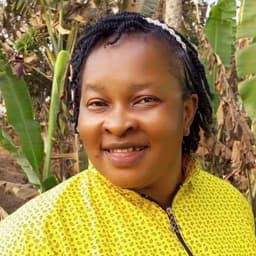

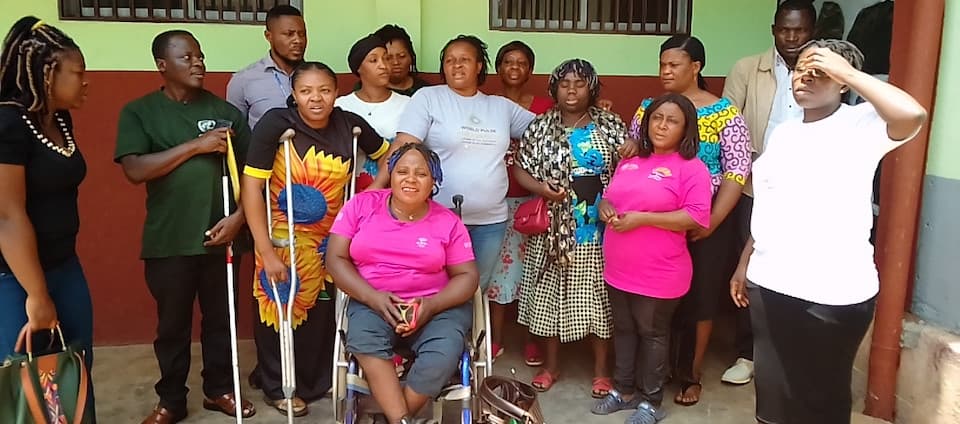
Image shows Veronica with women and girls with disabilities following a World Pulse Digital Ambassador event (Photo courtesy of Veronica Ngum Ndi)
She grew up with a disability. Now, as an advocate for women and girls with disabilities, Veronica shares actions individuals and governments must take to build a truly inclusive world.
Let the world adopt the concept of universal design to promote accessibility for all disability types.
Growing up with a disability, I often felt left out. For every opportunity, I was in last place, and it seemed like the world was against me. Deep in my quietness, I cried. Though my family and foster parents did all they could to empower me, I struggled because I saw my deformity as a difficulty I’d have to deal with my entire life. I worried because I could not wear the kinds of shoes or dresses my girlfriends wore, and I could not dance and take part in the same activities as other girls.
As I went through school and became a disability advocate, I came to understand the specific needs of women and girls with disabilities. I learned about gender-based violence (GBV) and how it is often perpetrated against women and girls with disabilities at the family level and then at the community level, too.
Reflecting on my own family, I realized they loved me but did not understand they were causing me harm. My family saw me as a sick and fragile person who they had to overprotect. They did not teach me how to leave my comfort zone or undertake challenges to become a strong person. My family made me swim in self pity and see myself as incapable of doing anything for myself. They made decisions for me based on my disability.
As time went on, I realized I wasn’t alone; every person with a disability faces similar challenges.
I moved forward in my career, focusing on rights for women and girls with disabilities and preventing GBV. I realized all of the challenges I have faced were not barriers but a very thin glass ceiling in my mind that I had to break. I broke that thin glass ceiling when I created the Community Association for Vulnerable Persons (CAVP). At CAVP, we promote disability rights and advocate for the inclusion and participation of women and girls with disabilities at all levels of community life.
While collaborating with other stakeholders, we use the slogans, “Nothing for Us Without Us” and “Leave No One Behind. ” CAVP identifies the various forms of violence women and girls with disabilities face in their families and communities and works to mitigate this violence. We educate families to prioritize education for girls with disabilities and link women with disabilities with volunteering and employment opportunities.
At CAVP, we are passionate about digitally empowering women and girls with disabilities. It helps them build their skills and enables them to access more opportunities locally and internationally.
With the ongoing Anglophone crisis in Cameroon that started in 2016 coupled with COVID-19, my country has become an even more difficult place for women and girls with disabilities to find opportunities. But CAVP ensures these women access training that will help them improve their livelihoods, attain financial independence, and become resilient.
In our work, gender-based violence is a difficult issue to root out. Many cases of violence stem from harmful cultural practices in our communities, such as refusing to educate girls with cerebral palsy based on the assumption that an evil spirit afflicts her. These practices generate barriers that relegate women — especially women with disabilities — to the background. This excludes women like me from fully participating in decision-making circles.
I want to tell the world that “Nothing For Us, Without Us” and “Leave No One Behind. ” To me, these slogans mean we must give women and girls with disabilities a chance to reach their full potential. We must give them the opportunity to contribute to the United Nations’ Sustainable Development Goals and promote the world's economies.
Let the world adopt the concept of universal design (the design of buildings, products, or environments to make them accessible to all people) to promote accessibility for all disability types. Taking these steps could significantly reduce violence against women and girls with disabilities by giving them independence and opportunities to thrive.
Governments should review their policies and intentionally prioritize the specific needs of women and girls with disabilities. They should subsidize health, education, social, and economic services and collaborate with organizations and donors to create accessible employment, internships, and volunteering opportunities. This will help women and girls with disabilities build experience and professional skills.
Family and community support is integral for people with disabilities; individuals and families must partner to advocate and promote the inclusion and participation of people with disabilities at all levels of community life.
People with disabilities should stand up for their rights and push hard to break barriers generated by their families that follow them to community life. We should continue to promote advocacy, sensitization, education, and awareness.
Being a leader of women with disabilities in the North West region of Cameroon is a good experience for me because I feel included at all levels. I lead women with disabilities and mentor a wide variety of women. I represent the voice of women with disabilities at meetings, actively participating in leadership roles and decision-making circles. This is a significant milestone in my career; I feel I am on the right path to bring more women with disabilities on board. And my voice will leave a legacy in disability work.
For now, a truly accessible world has not yet been attained. We will continue to learn and improve over time. Disability evolves as people age and we better understand adaptive technologies. To build a genuinely accessible and inclusive world, we need to continue researching and understanding more about specific disability needs.
I dream of more individuals building a passion and love for the disability community. With more people helping to prevent stigma, violence, exclusion, and other challenges, the world will be a better place for persons with disabilities.
This story was published as part of World Pulse's #disabilityjustice campaign and Story Awards program. We believe every woman has a story to share, and that the world will be a better place when women are heard. Share your story with us, and you could receive added visibility, or even be our next Featured Storyteller! Learn more
- Leadership
- Disability Justice
- Human Rights
- Africa