
CAMEROON: When the Internet Went Dark
Apr 30, 2019
story

© iStock | PeopleImages
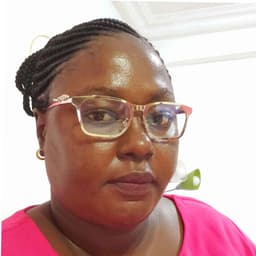
With Internet access newly restored, Nakinti reflects on all that was lost during the three-month, government-imposed blackout.
Every minute I spent in the Francophone city, I felt more like a refugee in my own country.
For the past three months, every day I spent in my home city of Bamenda, Cameroon I felt like something important was missing. Something important actually was missing—the Internet.
In January, the government of Cameroon shut down the Internet for the whole of English-speaking Cameroon. It claimed that Anglophone Cameroonians were using social media to fuel anti-government protests and threaten national unity.
Shutting down the Internet in Anglophone Cameroon meant that one-third of the country’s population was without access while our Francophone brothers and sisters enjoyed everything that comes with Internet connectivity.
The political protests in the Anglophone part of the country started out more like a joke. Teachers went on strike to protest the dominance of Francophone teachers in Anglophone schools. They said they were “unteaching” students with their limited knowledge of the English language.
People expected that, like every other teachers’ strike, classes would resume within a week. We would never have thought that the strike would degenerate into massive protests so intense that we would see blood flow, people die, buildings burn to ash, rampant arrests, schools shut down for months, and the Internet shut down, too.
It should be noted that Anglophones are a minority in Cameroon and have been disgruntled for decades about Francophone dominance in all facets of Cameroon’s economy. The situation has been referred to in our country as \"The Anglophone Problem. \"
The strike that began in November 2016 has yet to come to an end, and until last week, no one knew when our part of the country would be reconnected to the Internet. Then, on 20 April, after three long and painful months, I received a text to my phone.
\"Sister put on your data, Internet has been restored. \"
I rushed to my phone to find there wasn’t yet Internet from my phone data provider, so I reached for my laptop to check a second source—and there was a signal! Immediately, I Connected online and I felt happy relief. The government had finally restored Internet access to Anglophone regions.
My happiness faded quickly to annoyance at my government for what they put us through. They punished people who had not committed a crime, taking away one of the greatest development tools—digital access.
But after about 20 minutes or so, I felt relaxed and gulped down a glass of cold water. I told myself, \"Nakinti, I am always proud of you for turning all your challenges into opportunities. \"
I am filled with satisfaction because I challenged myself to make use of the forced disconnection. I repurposed the time I would have spent on the Internet to write and write and write without stop. And on the 19th of April 2017—just one day before our online access was restored—i completed a book titled \"Building Your Dream Organization or NGO. \"To Me, that is enough to leave me satisfied with what I accomplished in the absence of an online connection.
And yet, I lost so much during that time—and that leaves me with heartbreak.
Since the Internet first went dark, every weekend I would pack my little backpack, go to the bus station, and pay for a ticket to travel to a Francophone city many kilometers away from Bamenda in order to get online.
Each weekend I would spend close to $100 US for transportation, food, and hotel bills. I would wallow in pain when I thought of the cost. I was also struck by fear any time I thought of the risks I took each time I traveled.
The road was rough and drivers were reckless; I worried that thieves would break into my house should they discover I was out of town. My home sat empty, for I had moved my children to my mum and dad’s when the protests had become too violent and risky. The cities were dangerous—there were gunshots, tear gas, and arrests on the streets. Today, the violence has reduced as people sit indoors during the week at the request of Anglophone leaders, turning our streets into ghost towns.
When I was out in the Francophone regions, I slept with my eyes open, unsure of the hotel’s security. Every minute I spent in the Francophone city, I felt more like a refugee in my own country.
I found myself wishing that I were a magician so that I could have commanded the Internet to return. But since I was not, I painfully remained an Internet refugee, my heart bleeding all the while for what we had lost.
When I think of all the opportunities I missed out on as a result of the shutdown, I cry like a baby.
During that time, I saw emails late, missed important deadlines, and missed out on opportunities both online and off. For example, I missed the offer of a full scholarship to attend a two-month training abroad.
What did we do to deserve this?
In the Francophone city, hotel attendants don’t speak English so they would look at me like I was an idiot when I spoke. When I tried to hail a taxi or commercial bike, the drivers would take off the second a word of English came out of my mouth. Restaurant owners didn’t understand my food orders and would abandon me until I tried ordering in \"Franglais\"(English mixed with French). It pained me especially when during these encounters they would refer to Anglophones as foolish and say we are fighting a lost battle.
Again, what did we do to deserve all this?
Many Anglophone Cameroonians do not have enough money for food, and could not possibly have had enough to pay for transportation and hotel stays in a Francophone city. There are those of us who work online, those whose livelihoods depend on doing business online, those who study, do research, or are involved in trainings online.
This blackout has affected people in so many ways. The Internet is a vital tool for development, and cutting access put this development work on hold. Shutting down online connection for an entire group of people is a violation of our freedom to access information. It is a violation of our rights.
I cry for my fellow brothers and sisters who like me missed out on so much because they didn’t have Internet access. I hope we shall never again see a day without the option to log on.
STORY AWARDS
This story was published as part of the World Pulse Story Awards program. We believe everyone has a story to share, and that the world will be a better place when women are heard. Share your story with us, and you could be our next Featured Storyteller! Learn more.
How to Get Involved
Follow the hashtag #freeallarrested to learn more about the current situation in Cameroon and add your voice to pressure the Cameroonian government to release all Anglophone leaders detained during the protests.
Nakinti also seeks a volunteer to help edit the book she wrote against all odds during the three-month Internet blackout. You can get in touch with Nakinti in the comments section below, or message her directly through her World Pulse profile.
- Technology
- Human Rights
- Africa