
CAMEROON: Practicing Medicine in a Community Plagued by War
May 14, 2020
story
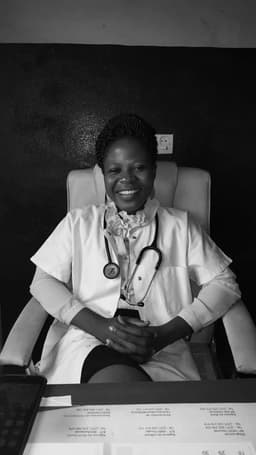

dr. Ngong Jacqueline Shaka was born breech in a clinic without a doctor. Today she practices medicine, but war has upset an already fraught healthcare system.
An entire community of more than 35, 000 people lacked a medic.
On Friday the 24th of January 1992, my mother’s water broke, and labor began. Five hours into labor, the first twin bounced out strong and resilient. Everyone impatiently waited for my arrival, but I didn’t come forth as expected. I was retained for three hours. Under these circumstances, the normal route of delivery would have been a C-section. But in a health center with no electricity and only one nursing aid attendant, there was no one to perform it. My grandma made her prayers to the Lord beckoning Him to save the lives of her daughter and her unborn baby. After three hours, I majestically presented one of my legs and was immediately pulled out by the midwife.
I was born and grew up in community called Fonfuka, in the Bum subdivision of the Northwest Region of Cameroon. Throughout my childhood, I could not understand why we never had a medical doctor in my community. My grandmother’s stories of the last doctor who ever served in my community dated back many years.
Throughout primary school and my first three years in secondary school, I was troubled as to why an entire community of more than 35, 000 people lacked a medic. As soon as I got into Form 4, I knew I wanted to become a doctor.
During my seven years in medical school, I spent my summer breaks volunteering for health campaigns that took me to many hard-to-reach communities like my own. I quickly realized that the disturbing lack of healthcare providers was the reality of my country.
Today, the doctor–patient ratio in Cameroon is one doctor per 40, 000 people, well below the World Health Organization’s recommended ratio of one per 1, 000. In rural, hard-to-reach areas of Cameroon, the ratio drops even further.
How can I sit back comfortably within the four walls of my office when I know that there are millions of patients out there who need my services but can never afford them? How Can I be at ease when I work in a region that has been hit hard by a humanitarian crisis for the past three years, leading to the displacement of a huge number of healthcare providers with the patients left to the course of nature.
How do I bear the sight of hundreds of teenagers with unwanted pregnancies or experiencing complications from unsafe abortions performed by charlatans? What Happens to the people living with HIV who no longer have access to their medications, or the people with diabetes and hypertension who are left to their fate as hospital doors shut? What Is the future of our children who can no longer access routine vaccines? And What about the countless women who now deliver their babies in the bushes?
These questions, and many more, plague my mind daily. I ask myself, why choose to practice medicine in the first place? Should I Just run away and pretend as if nothing is wrong?
Instead of giving in to my doubts, I remind myself that the intensity and the pain of my frustration with the healthcare system in my community and country is also an indication of an underlying opportunity.
And so, I have started health outreach activities at the community level targeting youth especially. My initiative is called Youth 2 Youth - Cameroon. While my efforts seem like an attempt to use a glass of water to save a mansion ravaged by fire, I am still here, doing what I can within this reality every day. I only hope I will not lose my mind!
The future of Cameroon’s healthcare system perplexes and troubles me, but I salute the bravery of the healthcare providers who risk their own lives to carry out their practice within these regions plagued by war. To all those of this noble profession, you are true heroes.
This story was published as part of the World Pulse Story Awards program. We believe every woman has a story to share, and that the world will be a better place when women are heard. Share your story with us, and you could receive added visibility, or even be our next Featured Storyteller! Learn more.
- Peace & Security
- Health
- Africa