
CAMEROON: How Buses Can Stop the Spread of STIs
Apr 30, 2019
story


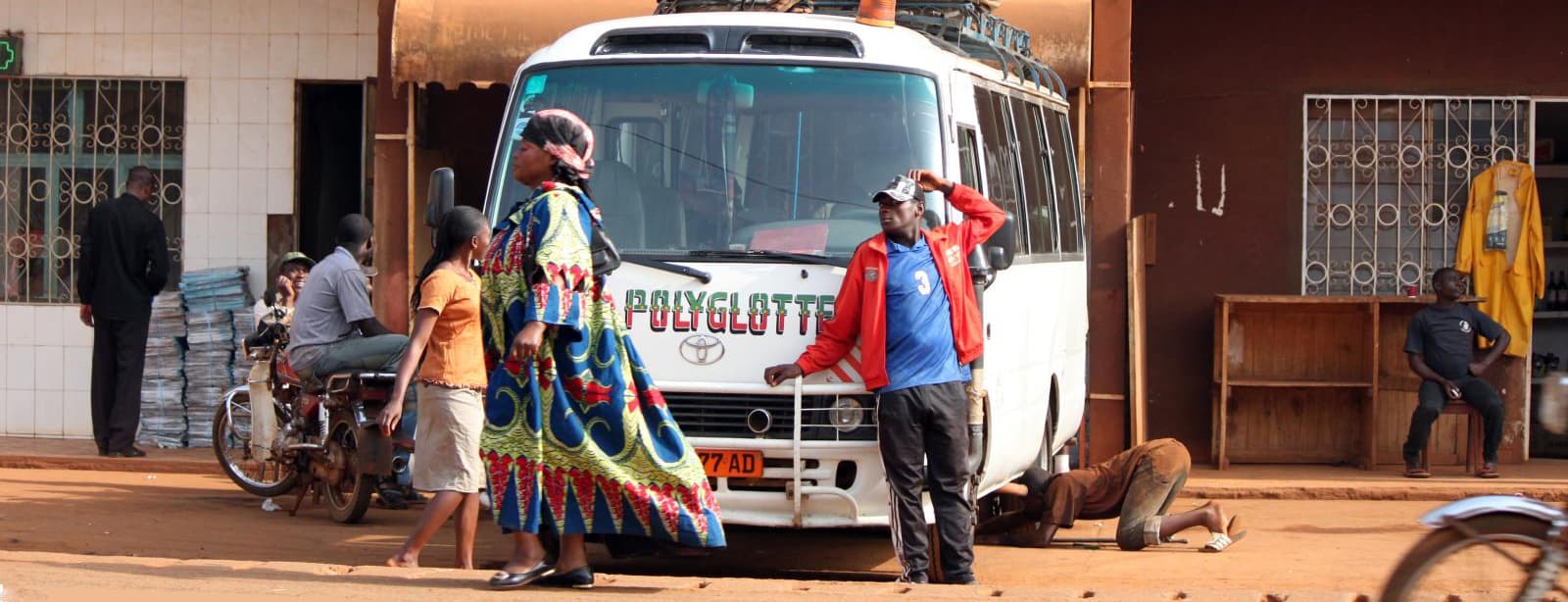
Photo © Carsten ten Brink/Flickr (CC BY-NC-ND 2.0)
Sally Maforchi Mboumien'sinnovative idea could change the way women and girls access sexual and reproductive health care.
in Cameroon today. .. People don’t talk about the role of contraception in preventing pregnancy and STI transmission.
Once, while traveling on a commercial bus from the capital city Yaounde to Bamenda, Cameroon, I witnessed with keen interest the lessons given there on the bus.
During an eight-hour journey, six hawkers took turns advertising their products to us, the travelers. Common among this group of marketers was that each had at least a product or two they claimed treated sexually transmitted infections (stis) as well as helped with the proper functioning of one’s sex organ.
I was particularly captivated by the eloquence with which these vendors danced through their descriptions of various medical issues using heavy medical and biological terms. Their lectures were highly animated and left us convinced they knew what they were talking about.
Passengers posed questions to the hawkers and shared worries related to various stis, claiming their interest was on behalf of a friend or a relation. Afterward, sale of the products began. Some of these products were African panaxia, ginseng powder, king seed, lion kola, “Lotionlistic, ” just to mention a few.
I observed with disbelief as passengers bought products from these vendors, saying they were going to help a neighbor, family member, or friend. Amazingly, people bought the same product for the treatment of at least five or more diseases. I was deeply concerned at what I was witnessing.
In order to understand what motivated my fellow passengers to trust such sources when it came to their sexual and reproductive health, I decided to talk to some of them. The first person I spoke to, an undergraduate student, confessed to me, “I know some of these things are fake, but it is better than going to the hospital to be arrogantly interrogated by medical personnel. ”
Next, I spoke with a young girl who was apparently suffering from an advanced stage of vaginal infection. She said to me, “The way this guy explained the manifestation of the disease, it is just like we live together because that’s exactly what I am going through. I believe his medicine will solve my problem. ”
Then I spoke with another young woman. She told me she had been to the hospital and was diagnosed with chlamydia. When I asked why she bought the product on the bus instead of following treatment prescribed at the hospital, she said, “It is very expensive, Auntie. ”
Finally, I spoke to one of the vendors about his product. He told me it was effective and went on to say, “If I have money today, it is thanks to products for the treatment of stis because people are suffering. Auntie, don’t mind when people are claiming they are buying for others. They usually call back to buy more. ”
This experience left me with a burden in my heart. Most of the buyers on the bus were elders, and if they suffer from such ignorance around the treatment of stis, then what of the young who rely on their knowledge on such issues? It Seemed to me that ignorance on sexual and reproductive health (SRH) in Cameroon had made many vulnerable to false advertising while enriching the heartless.
In Cameroon today, there is limited access to SRH education, and people don’t talk about the role of contraception in preventing pregnancy and STI transmission. Only abstinence, which is hardly practiced, is frequently discussed, most likely because of religious and cultural stances that forbid the use of contraceptives.
Though the government provides mother and child care to ensure low rates of maternal and infant mortality, there are no services at present that can be accessed for unbiased information on SRH.
There on the bus I asked myself, how could I use this situation to replace ignorance with knowledge?
Instead of allowing crooks to use buses to sell fake drugs, I could design a program to educate the public on reproductive health issues on these same buses. A large number of people from diverse backgrounds and geographical locations travel by bus in Cameroon. Buses could, therefore, serve as a good place for sharing basic information on SRH issues and helping spread this knowledge to different populations and locations.
On these vehicles, I have a vision ofcarrying out discussions on topics such as anatomy and physiology of the sex organs, types and sources of common infections, locations of treatment centers, and more. Such mobile trainings would greatly increase SRH awareness and reduce misconceptions, thereby saving many from infections, unwanted pregnancies, crude abortions, sexual abuse, and early motherhood.
In order to achieve this dream, I have started speaking with managers of commercial bus services, health care workers, and some health centers about collaborating on this campaign.
This will be an opportunity to start a nation-wide conversation on SRH education among people from all walks of life. We will spread awareness of these issues and start building momentum. We’ll begin to advocate for universal sexual and reproductive health rights in Cameroon.
Commercial buses, if well exploited, can be social health clinics. By providing proper orientation, counseling, and unbiased information on these matters in these spaces, the people of my community—especially women and girls—will no longer suffer at the hands of ignorance and fear. They will be empowered to responsiblytake their health into their own hands.
STORY AWARDS
This story was published as part of the World Pulse Story Awards program. We believe everyone has a story to share, and that the world will be a better place when women are heard. Share your story with us, and you could be our next Featured Storyteller! Learn more.
- Health
- Education
- Africa