
CAMEROON: An Open Letter to Body Shamers
Apr 30, 2019
story


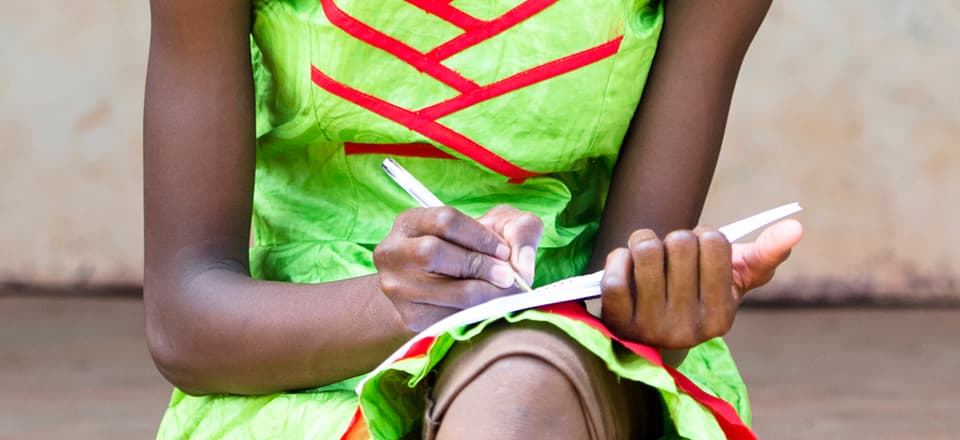
Photo © borgogniels
Leila Kigha takes a stand against society's beauty standards, exchanging self-hatred for body love.
We can be the ones to treat each other as human, when no one else will.
Dear Body Shamers,
I was 15 when I first shaved my legs. I regret it.
Your messages came at me from all directions and never relented. Every magazine I thumbed through, every advertisement I was exposed to, and every TV show and movie I watched taught me that hair on my legs was a mistake that needed correcting.
You made me self-conscious about the way I looked and very embarrassed about my leg hair. I was also too embarrassed then to ask for a safety razor to shave with, so I ended up shaving with a razor blade. When my leg hair grew in again it came in thicker and with a rash.
You might not realize your persistent messages were a form of body shaming, but they certainly were. They fueled my education in self-hatredfrom girlhood to teenhood to womanhood.
You make women ashamed of our body hair that grows naturally. You make us believe we must alter and restrict ourselves before anyone will acknowledge our humanity.
We spend time and money shaving off all of our hair without even thinking we have a choice. We do it because you, our body-shaming society, tells us our bodies are supposed to be totally hairless—not for hygienic reasons but because of your absurd standards of beauty.
The day I met Mr. X, however, my mindset about myself, my body, and all God has given me changed.
mr. X, I assume, had also been subjected to your body-shaming propaganda. Your messages about women seemed to have infiltrated him so deeply to make him defensive at the sight of an unaltered female body.
He was a stranger, but he criticized my body, attempting to shame me because I had rejected his advances. He told me point-blank that a woman is not allowed to let hair grow on her legs. To support his point, he informed me of a lady who had to shave her legs to obtain a job.
Instead of shrinking in silent embarrassment and self-hatred at his remarks, I stood up to him. I refused to be shamed. I told him, “If I have to get rid of the things that make me who I am to be appreciated or valued by a man, then I don’t think you are the person I should be talking to or dealing with. ”
That day I pledged to appreciate who God has made me (fearfully and wonderfully) and to carry my head high. I chose to genuinely love me and live from that perspective irrespective of what society says.
Now when I walk in public, I am confident. I draw my strength from accepting myself for who I am and I refuse to submit myself to your definition of what a woman should be.
But it isn’t always easy. Like Mr. X, your messages of what a women should be run deep in me too.
We can be modern and liberal. We can understand the importance of freedom of expression, breaking gender clichés, not conforming to social pressure, and being comfortable in our own skin; but if we’re honest—really honest—few of us would say we prefer a hairy leg to a shaved one. Some men would no doubt say they find it disgusting.
Today I say to all women that wecan learn to stop perpetuating this toxicity from our dominant, anti-female culture. We can learn to stand up to you, the body shamers.
We can learn how to support and love and be awestruck by each other.
We can be the ones to treat each other as human, when no one else will. We can do better.
I hope one day all women know a love of our bodies so boundless and intoxicating that it emanates from our eyes, our smiles, our skin, and graces every person who has the privilege of walking by us.
I hope one day ourpresence in the world will letgirls and women know that they have the right to give their bodies a chance and stop conforming to absurd standards.
I hope that together we’ll become catalysts of self-acceptance. Each one of us can inspire one girl who can then inspire her friends. They'll inspire their teachers, who will inspire other students. One day these students will inspire their daughters, who will go on to inspire their own children.
I hope one day we all will be free to be comfortable in our bodies and not let the dictates of men and culture determine for us how we should appear, feel, and be in our own bodies.
I dare to hope.
Sincerely,
leila Kigha
- Leadership
- Health
- Africa