
Access to Justice in Irregular Spaces
Feb 25, 2023
story
Seeking
Collaboration


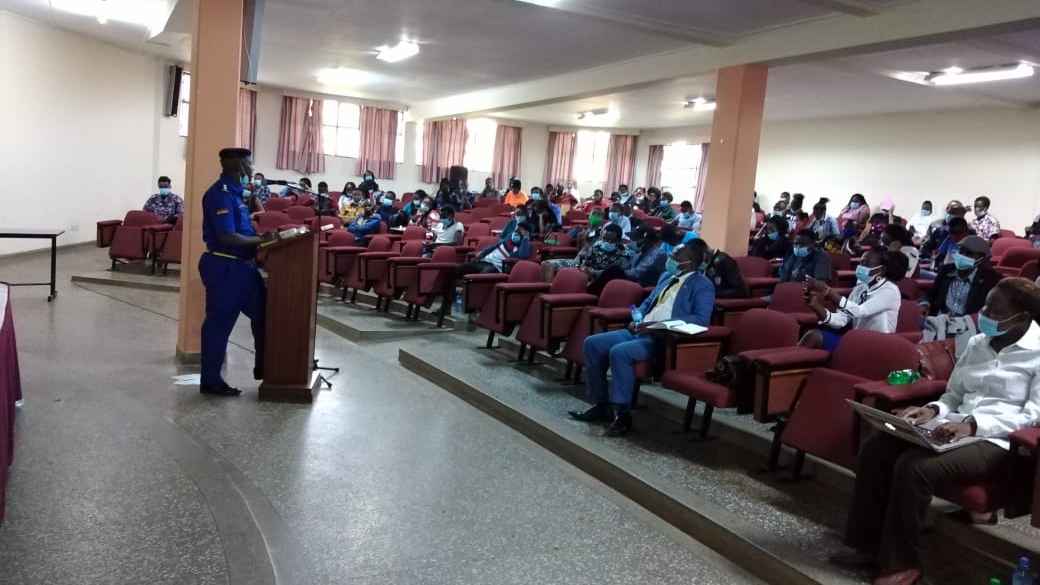
A Student-Police Dialogue at the Catholic University of Eastern Africa, Nairobi
All over the world ,the police are mandated with maintaining law and order. Sometimes they go overboard and subject citizens to brutality, sometime there are trumped up charges and sometimes they arrest the right persons who have committed crimes. In some situations, cases are followed to the end and the affected get justice , in other cases justice become elusive.
The civic space is shrinking across the world . As noted by SDG 16 Hub, even before the pandemic, civic space had been shrinking worldwide.[1] According to the 2020 CIVICUS Monitor only 3.4% of the world’s population lives in countries with open civic space. The shrinking civic space is fueled by increasing mistrust , repression and muting of critical voices .It is also characterized by abuse of human rights and media gags. Brutality on the public is another characteristic of shrinking civic space , more so when the public expresses their constitutional rights. Take for example freedom of protest in a situation where the law allows for the right to protest but in the process of protesting , citizenry get beaten up and some end up being maimed for life. Students in institutions of higher learning across East Africa have had their fair share of repressions , particularly in relation to civic space .For example the police unleashed brutality and excessive force on students at Jomo Kenyatta University of Agriculture and Technology (JKUAT) for protesting over rising insecurity in their campus.[2] In Uganda, the police and military cracked down on students protests over fee increases at Makerere University in October 2019, security forces further fired teargas into student residences and raided dormitories.[3]In these processes of protest to defend and demand rights, many students have become victims of expulsions from institutions of higher learning.
The students first contact with the justice process is often when they get arrested and are taken to the police station. Conversations with students who have been in contact or conflict with the law reveal that many are not familiar with the justice procedures , many get intimidated and are at the same time confused at the time of arrest .Many are left alone when arrested as their comrades take off .The assumption in the public eye has always been that if you are in university , it means you know everything but this is not the reality , especially when it comes to human and legal rights .Closely related to the freedom of assembly is the freedom of speech. Sometimes students may become victimised for their expressions be it verbally on media or through what they write.
Many people in Kenya see the law in the context of prisons, courts and the police, coupled with this fact is that accessing legal services even the most basic ones involve money which students and the ordinary Kenyan citizens in general may not be able to afford. Furthermore, students in universities based in rural areas may not be able to adequately access justice due to distance to the courts.When in court , students can be faced with charges such as destruction of property or causing disturbance. The time the case starts to when it ends may interfere with the student’s academic performance , especially due to the stress that comes with knowing one has a case in court.
Against this backdrop of realities , Haki Nawiri Afrika through an Initiative on Addressing Shrinking Civic Space in Institutions of Higher Learning addresses civic space challenges among students through conducting human rights education targeting university students and out of school youth and at the same time conducting paralegal training to enable youth understand their rights and be able to protect the rights of others .The sessions include the youth being taken through legal processes , the Penal Code , elements such as plea bargaining and the young people get to share their experiences with the justice process and how they reacted when arrested.
Haki Nawiri Afrika has also organised Student-Police dialogues , with the aim of enabling students in a safe space to express the challenges and realities with the justice system and the police to share what it is that they expect from students. These police dialogues are held at the university or in a community hall .It is a space where young people are free to ask the police questions without fear of arrest or any form of brutality of later victimisation. Once in a session with police officers from Kiwanja Police Station , one student asked the Officer Commanding Station(OCS) during the dialogue, “Why do you ask us so many questions and yet you never give us the time to respond to these questions?. The student was a given a reply that this is part of interrogation to ascertain whether a person is innocent or not. The students through these interaction also get to know what the Police Act[4] says and the repercussions or resisting arrest. At the same time these dialogues enable students to understand their rights .
This initiative can best be described as an offline or physical advocacy and started as pilot which lasted for three months .This initiative was able respond to the human rights abuse experienced by university students, strengthens students’ ability to respond to their rights when abused as well as provide platforms where students can safely express their grievances .This initiative also seeks to mend the animosity that exists between university students and the police .This also helps enhance capacity of students to access justice and develop skills and knowledge of students to contribute to solving community’s problems. Additionally the student-police dialogues create platforms for sharing and learning from each other and to enhance human treatment of students by the police administration. One student during the dialogue said “In my life I never believed I could sit in the same space with a police officer and discuss matters justice.”
The advocacy initiative has had positive impacts .The university students part of the initiative have better knowledge on rights .The engagement with the police has also helped address the information gaps as well as build better interactions.
These sessions are just a tip of the ice-berg in advancing human rights and social justice in institutions of higher learning. More support is needed to reach more students and more universities not only in Kenya. This is an idea that can be easily replicated in many learning institutions across the African region.
[1] https://www.sdg16hub.org/group/25/discussion/civic-engagement-and-civic-space-3rd-e-discussion#:~:text=Yet%2C%20even%20before%20the%20pandemic%2
[2] https://www.the-star.co.ke/news/2019-11-12-university-leaders-demand-action-after-cop-brutality-at-jkuat/
[3] https://www.hrw.org/news/2019/11/04/uganda-security-forces-attack-students-journalists
[4] http://www.kenyalaw.org/kl/fileadmin/pdfdownloads/Acts/NationalPoliceServiceAct_No._11Aof2011_.pdf
- Training - Online Advocacy
- Africa