
A Rose in the Garden
Jan 21, 2015
story
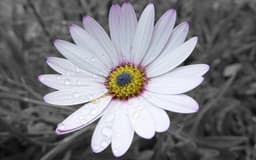
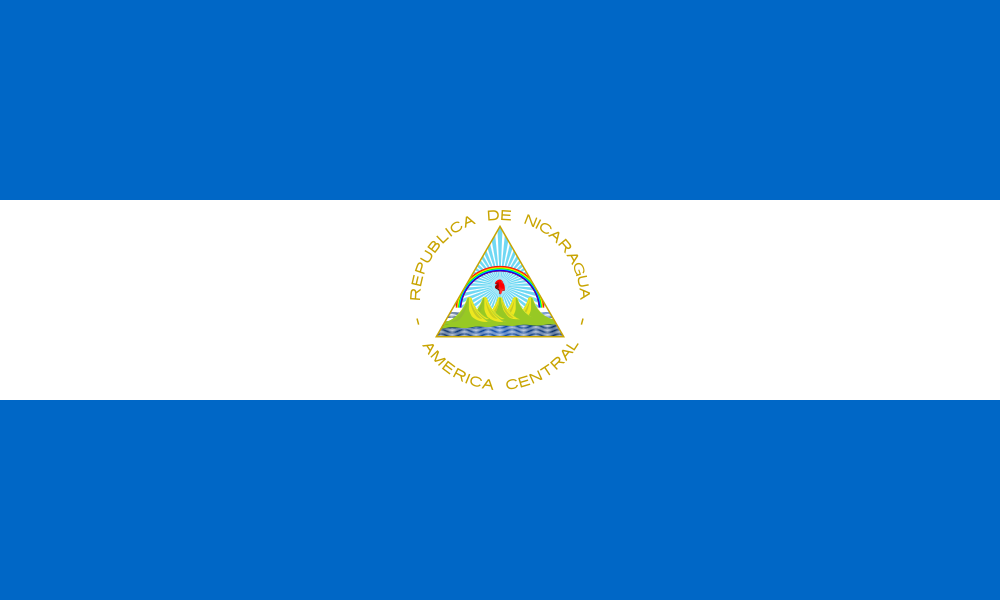

It was two years ago, and I still remember the day I met Rosa Amanda Vargas. There she was, one of a group of dreamers who had gathered to share perspectives on critical social justice issues affecting Latin American countries. Like her name, she was a beautiful rose, drawing my attention to what had brought her to the Hemispheric Social Alliance regional meeting in June 2009: the dream of building a better world.
Although Rosa grew up in poverty in Nicaragua, the painful circumstances of her early life do not seem to have extinguished her strength and courage. Now in her fifties, she recalls her childhood as a very tough time. She was one of the oldest children of a single mother who supported her children by hand washing and ironing clothes for wealthy families. Rosa was ten when her mother died of cancer. She remembers, “My mom died on December 27. Ever since that day I stopped enjoying Christmas because it reminds me of my mom.” Her siblings were taken away to live with other families while Rosa was left in the care of a lady named Emilia, the midwife who had assisted Rosa’s mother in childbirth. Emilia was also very poor; yet, she had promised Rosa’s mother she would make sure Rosa got an education.
Money was very scarce and so Rosa had to work to pay for school. She ran errands, cleaned houses and even took care of young children, although she was a child herself. After about three years of living with Emilia, Rosa was sent to live with a wealthy family in the capital, Managua. This family allowed Rosa to live in their home in exchange for work: cleaning, ironing, sweeping and all kinds of chores. She was able to attend school at night, even though she barely had time to study. Rosa remembers those years in that house where she often endured physical abuse and discrimination, saying, “They fed me with leftovers. I didn’t eat the same food their children had. I began to be aware of social inequalities and injustices.” Rosa, however, was lucky she was not sexually abused like most girls trapped in this system of exploitation.
In the early 1970s, as Rosa was completing high school, she became more aware of the social struggles happening in Nicaragua in response to the dictatorship of Anastasio Somoza who had been in power for over forty years. By this time the student resistance movement was strong and student strikes were organized around the country. In college Rosa, who worked as a secretary to pay tuition, became actively involved in the national resistance movement against the Somoza regime. She handed out pamphlets on campus in support of the liberation and collaborated with some of her classmates who were directly involved in the clandestine armed movement fighting the dictatorship.
In the late 1970s, the final insurrection against Somoza had strengthened and the resistance was liberating many cities. In the last months of 1978 the country was in state of siege; repression against civilians and guerrillas forces had become a horrifying bloodshed. During the final days of Somoza’s regime, Rosa worked in her neighborhood in support of the liberation of the country. She built barricades, prepared shelters, took care of the wounded and looked for medical supplies. “The National Guard was attacking everybody with machine guns, tanks and 500-pound bombs. It was a complete genocide. The Guards were killing everybody, especially the youth,” Rosa recalls. In 1979 the Somoza’s regime was overthrown by the revolutionaries, known as the Sandinistas, and the new government brought many social changes.
During the 1980s Rosa worked as a teacher at a college. She also was engaged in diverse governmental social initiatives focused on community organizing and policies favoring the poor such as vaccination campaigns, literacy programs, and the establishment of day care centers. She became a strong and acknowledged leader in her community. Sadly, dissident groups, many of them ex-Somoza guardsmen, began an offensive military campaign. Known as the Contras, they had the financial and military support of the United States administration. This armed conflict devastated the economic infrastructure of Nicaragua, bringing death and pain to thousands of families.
Then in 1990 Nicaragua held presidential elections. Fearing that the war would continue if the Sandinistas remained in power or that an impending US invasion would occur, Nicaraguans brought into power an alliance opposing the revolutionary government. The newly elected government implemented a social-economic model that brought down many of the Revolution’s social justice advances, including universal free health services and free public education. Since then, Rosa has continued her social activism, supporting resistance movements against governmental policies that affect the poor and violate their human rights. Although a cease fire ended the war, Rosa felt that there could be no real peace without social justice so she began wearing a self-made white outfit at demonstrations as a symbolic call for peace and justice.
Asked about the main challenges faced as a leader, Rosa commented, “Political polarization and dependency are blocking people’s development. Many are accustomed to just receive, to depend on others.” To counteract this dependency, Rosa worked as coordinator of a project focused on providing youth with educational alternatives to keep them out of the streets and make them self-dependent. She considers the project, which was begun in 2003, as one of her most fulfilling experiences.
Today she is concentrating on her dream of developing a program in response to one of the most critical issues affecting her community: teen pregnancy. Most of these pregnant girls have left school, are raising their children on their own and lack opportunities to better their lives. Rosa wants to provide them with the educational and training opportunities she did not have when she was growing up.
Rosa is truly a survivor, a resilient spirit, passionate for social justice. Like a rose in a garden, she perseveres, beautifying the lives of those she touches.
This article is part of a writing assignment for Voices of Our Future a program of World Pulse that provides rigorous new media and citizen journalism training for grassroots women leaders. World Pulse lifts and unites the voices of women from some of the most unheard regions of the world.
- Northern America