
Background "PERIOD POVERTY" is a universal te...
Jan 16, 2023
first-story
Seeking
Visibility
Background
"PERIOD POVERTY" is a universal term that speaks to lack of access to period dignity, products, knowledge, and education. This also extends to access to water and sanitation disposal and waste management, as well as access to treatment of period-related ailments such as dysmenorrhea, endometriosis, and PMS, and mental health issues associated with period poverty.
There is a paucity of content and research on period poverty. This is a subject that does not receive a lot of attention from decision and policy makers. You are hardly going to hear about it on a political campaign stump. It will get attention on menstrual day with obligatory and gratuitous declarations that are mostly forgotten the day after.
Period poverty is not encouraged to be part of public discourse, even on progressive social digital platforms where consumers pontificate on all matters that affect their daily lives. There appears to be limited appetite to engage on the issue. It is surprising how, when you post on the subject, you are more likely to get engagement on private DMs than public ones.
It is not a cool subject to discuss at the water cooler, coffee station, or dinner table either. Bring it up. People start getting shifty or squirmy, avoiding eye contact, and exhibiting exit-seeking behavior.
"People would rather talk about gonorrhea than periods." "Because we don’t talk about it, we don’t know it’s a problem." Days for Girls global advocacy director Diana Nelson
Unfortunately, we can fix that, which we don’t even acknowledge as a problem.
The Challenge
The world's population has now reached 8 billion, with half of that estimated to be female. The World Bank estimates that 300 million women are menstruating daily. A staggering 500 million are said to lack access to period products and facilities to handle their menstrual activities safely, adequately, and with privacy.
Period Poverty in a Random Global Snapshot
¦ In India, the menstruating population is estimated at 355 million, and 12% of them live with period poverty, which is close to 43 million people.
¦ United States Research indicates estimated 16.9 million menstruators are affected by period poverty and that some have to make monthly choices between buying food or menstrual products.
ü 30 states in the US still consider menstrual products non-essential items and tax them as such.
ü While 25 million women in the US live in poverty, shockingly, food stamps are not covered. One in five teenagers in the United States has struggled to afford period products.
¦ As of 2020, the Chinese government regulates a 13% sales tax on feminine sanitary products. That is 4% higher than the 9% tax for essential daily necessities such as grain and water.
Country
Affected
Country
Affected
South Africa
3.7 M
France
1.7m
Bangladesh
73%
Kenya
65%
Malawi
70%
Nigeria
37%
Latin America
43%
Brazil
26%
Uganda
28%
Ethiopia
41%
Cost to Consumer (Menstruators)
The global feminine hygiene products market is expected to grow from $25.37 billion in 2021 to $26.65 billion in 2022 at a compound annual growth rate (CAGR) of 5.1%. The feminine hygiene products market is expected to grow to $32.97 billion in 2026 at a CAGR of 5.5%. 23 Sept 2022
This is a billion-dollar industry with a captive market. Pandia Health estimated the costs of some feminine hygiene products to women:
¦ "If a woman was to use one tampon every six hours and four tampons are used every day, that would equal 20 tampons for every five-day menstrual cycle, totaling 9,120 tampons in their life." If a box of tampons costs $7 and there are 36 tampons in one box, the cost for a lifetime would equal $1,733.33.
¦ If a woman were to use three to five pads a day over a five-day period, they would likely spend around $4,752 in their lifetime on pads.
¦ If a woman leaks during her period and one ruined panty costs $5, it will cost $2,280 for 456.
¦ According to Investopedia, there is also the double whammy of the "pink tax." For instance, shaving razors sold for women will cost a lot more than identical men’s razors. 30 of the 50 U.S. states still have a pink tax.
¦ "In Utah, period products are taxed as a luxury item, but condoms aren’t taxed," said BYU alumna and Days for Girls global advocacy director Diana Nelson. "It’s under a pink tax because feminine hygiene products aren’t seen as a medical necessity but as a luxury."
¦ The tax in those states in the U.S. on menstrual products ranges between 4.7% in Hawaii and 9.9% in Louisiana.
The Unintended Consequences of Period Poverty
Life Limiting Consequences
Presenteeism and Absenteeism
Health and Mental Health Consequences
Life Limiting Consequences
Journal of Global Health Reports
Presenteeism and Absenteeism
¦ Leads to the phenomenon of one being physically present at school or at work but suffering reduced productivity at work or school due to either dysmenorrhea or endometriosis.
¦ Physically present for school or work, fear of leaking due to inadequate or inappropriate period product substitutes prevents menstruators from, for example, leading a presentation at work or taking part in a class exercise.
¦ Leads to absenteeism, which has a knock-on effect on school performance as well as future earning power.
¦ In March 2018, a period tracker app called Clue said 18% of women in the U.S. missed school, work, or an event because of menstruation.
¦ Reduced participation in school physical activities
¦ Exacerbation in gender gaps when it comes to education and future access to well-paying jobs
¦ Contributes to drop-out rates.
¦ Creates self-esteem and self-worth issues.
¦ Period shaming and bullying
Health and Mental Health Consequences
Journal of Global Health Reports
¦ Dysmenorrhea (period pain) goes untreated, impacting the quality of life.
¦ When menstruators use substitute products such as rags, plastic, or newspapers, this can have serious repercussions on their health as they expose themselves to infections. Studies have demonstrated that these substitutes lead to a high risk of urogenital infections, including urinary tract infections and bacterial vaginosis.
¦ Toxic shock syndrome can happen when menstruators wear a tampon for too long. In most cases, the menstruator will do this to stretch their supply.
¦ Studies indicate that period poverty can leave menstruators with poor self-image, insecurities, distressing anxiety, and depression.
PERIOD POVERTY'S INDIGNITIES & DEHUMANIZATION-
An up-close and personal experience
Having spent a good chunk of my life in boarding school, I had a front-row view of period poverty before anyone even coined the name for it. I thought I came from a poor family, but when confronted with girls that were using rags during their cycles, I had to revise my thinking pretty quickly.
A month into the school year, it was a shocking revelation that of the five of us sharing a tiny dorm room, only two of us had sanitary towels, and that it was indeed the same for most of the school. I barely knew my dorm roommate; we were united by the fact that we were the exception in our "privilege" of having sanitary products.
I remember how the two of us huddled in a corner, red-eyed from crying, befuddled, and trying to process this scenario that no one had deemed necessary to prepare us for. After a lot of whispering back and forth, with our other dormmates curiously looking on, the two of us decided we had to take our own "period product" and share it with the other three girls.
Once we made that decision, it felt good to be able to help. That feeling did not last long, though. No sooner had we done that than we were suddenly struck by a visceral fear of what might happen if we also ran out of our own "product" and our parents took too long to replenish our supplies.
Those were the days of snail mail. Would we also have to use "rags" like the other girls? Heaven help us, and where, pray tell, did one even find these rags? Then there was also the sticky issue of explaining to our parents what happened to the product that we left home with, which was meant to see us through the entire school term.
I had an older sister who went to a different boarding school. Then, she was my "oracle of wisdom" on a wide range of topics, ranging from boys to menstrual cycles. Whenever we were home for the school breaks, we would talk into the night about the plight of some of our schoolmates. Period poverty was always a part of those discussions, although, of course, we did not have a cute name for it.
There was so much I wanted to ask my sister about this subject, such as how sanitary and safe the sanitary substitutes were, etc. But even as a fourteen-year-old, discussing this with my sister felt like I was further violating the dignity of my schoolmates, who, through no fault of their own, had been robbed of their dignity.
I saw firsthand the humiliation and misery that poverty during that period wrecked on my fellow students. High school is tough enough. Add the layer of a young girl undergoing "the change," as if that is not enough, not having the means to deal with this "change" that you cannot wish away.
I saw how poverty affected other girls at school, both physically and mentally. The fear of leakage preoccupied most of us in the lower streams. Those without period products fared even worse:
¦ Less participation in school activities, not just physical activities, mind you.
¦ A schoolmate who was on our debate team, and who could have easily won the championship did not show up for the debate last minute. Only to find out after much coaxing that she was terrified of standing in front of a crowd and having the possibility of leaking because she used rags and newspapers.
¦ Even for those of us with period products, none of us could afford tampons, so it was impossible to participate in sports such as swimming. The sheer trauma of having a ‘leakage accident’ in the pool was enough of a deterrent in itself.
I am sixty years old now, and I first encountered period poverty when I was fourteen and in high school. Yet here I am almost forty-six years later, and this is still very much a part of our lexicon. How can that be, with all the strides that we have made as a society?
We still have girl children who are:
– missing school,
– dropping out,
– exclude themselves from activities
– inability to fully participate in school and at work
– falling behind in life because of an issue they cannot avoid.
There are countries where high school booster clubs raise millions of dollars for football stadiums and sports gyms. I have yet to hear about the same booster clubs making sure all girls have access to sanitary products, especially during school holidays. I stand to be corrected.
My fear is that unless something happens on a global scale, my eight-year-old granddaughter may turn sixty and, like me, be talking about period poverty. That is simply too depressing a possibility. It is for that I refuse to put this issue down daunting a task as it maybe.
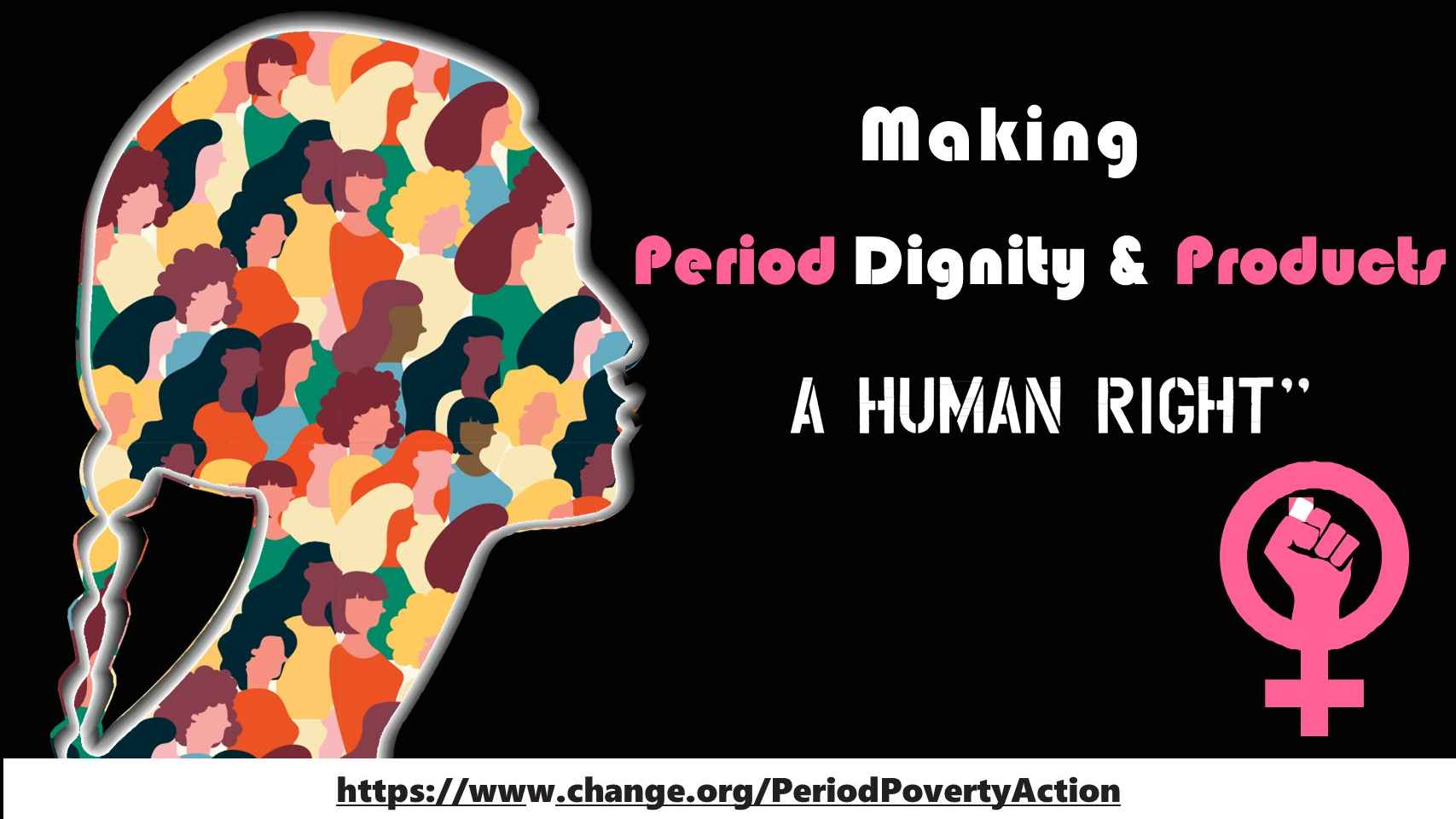
A Case for Classification of PERIOD PRODUCT as a HUMAN RIGHT
“Human rights are rights we have simply because we exist as human beings - they are not granted by any state. These universal rights are inherent to us all, regardless of nationality, sex, national or ethnic origin, color, religion, language, or any other status.” (OHCHR).
Enshrined in the WHO constitution is the principle that sees HEALTH as: -
“A state of complete physical, mental and social well-being and not merely the absence of disease or infirmity," (WHO)
“The enjoyment of the highest attainable standard of health is one of the fundamental rights of every human being without distinction of race, religion, political belief, economic or social condition,” (WHO).
“Poverty is hunger. Poverty is lack of shelter. Poverty is being sick and not being able to see a doctor. Poverty is not having access to school and not knowing how to read. Poverty is not having a job, is fear for the future, living one day at a time.’ (The World Bank Organization).
When we look at what the UN has enshrined as human rights, what the WHO describes as a tenant of health, and lastly, how the World Bank describes poverty, it becomes crystal clear that period poverty violates basic human dignity, and is not conducive to a woman’s well-being, physically and mentally.
According to World Bank statistics, 3.905 billion are females, representing 49.58% of the world population. According to estimates, 300 million women menstruate every day. For women undergoing menstruation, this is not a choice they can opt out of.
When a menstruator is unable to access period products, she, therefore, is unable to attain the state of health that the WHO describes as ‘a state of complete physical, mental, and social well-being and not merely the absence of disease or infirmity."
Covid19 galvanized the world into a global response that had us mask up to protect ourselves, as this was an existential threat to all. Governments were able to divert funds and organize new supply channels for PPES. So clearly, where there is a will, there is a way. Why then, in 2022, do we still accept period poverty among us? While period poverty is not an existential threat, it should no longer be permitted to persist as it violates basic human dignity.
Menstrual hygiene is without question an integral part of a woman’s wellbeing that must undoubtedly be catered for on a consistent and sustained basis. This requires a paradigm shift in how the issue of menstrual hygiene is dealt with. Without a seat at the table, in terms of policy and budget allocation, countries will not be compelled to make meaningful changes in how they handle this challenge.
We must act with the urgency of now and treat women’s rights as human rights. I believe classifying Menstrual Hygiene as a Human Right will go a long way toward bringing about the change we all want.
Each year, the world commemorates World Menstrual Hygiene Management Day (MHM) on May 28, which becomes a perfect backdrop for empty platitudes and assuaging our guilt, and then we all blissfully go about our business.
The irony is that ‘BUT FOR THIS CYCLE, NONE OF US WOULD BE HERE!!!!!
Use of Grant
The goal is to run a global 120 – day simple social media campaign that is self-explanatory and drives traffic to the petition and translates to signatures. In the process the campaign would have created global awareness for period poverty.
Upon reaching 1 million signatures they can then be presented the UN Women and United Nations Human Rights Commission for consideration.
PETITION LINK 👇
https://www.change.org/PeriodPovertyAction
Personal Page 👇
https://www.linkedin.com/in/francesca-nxedhlana/
Newly minted page Period Poverty Action pages on Facebook and LinkedIn 👇
https://www.linkedin.com/company/periodpovertyaction/
https://www.facebook.com/periodpovertyaction
WHO I AM
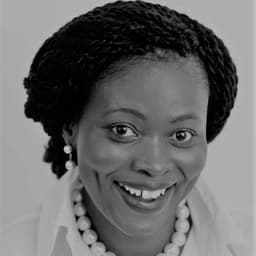
I am a Zimbabwean American with residency in South Africa. Born to a Botswana mother, therefore a global citizen in my view.
I have global experience in areas of Technology; Healthcare; Social Research in both the United States and Africa. I have had the privilege of seeing how period poverty impacts women in both these geographies.
LINKEDIN PAGE 👇👇
https://www.linkedin.com/in/francesca-nxedhlana/
- Girl Power
- Human Rights
- Leadership
- Health
- First Story
- Global